Experimental Typography
Type design, Book design, Printmaking (Risograph, Linocut)
Self-initiated
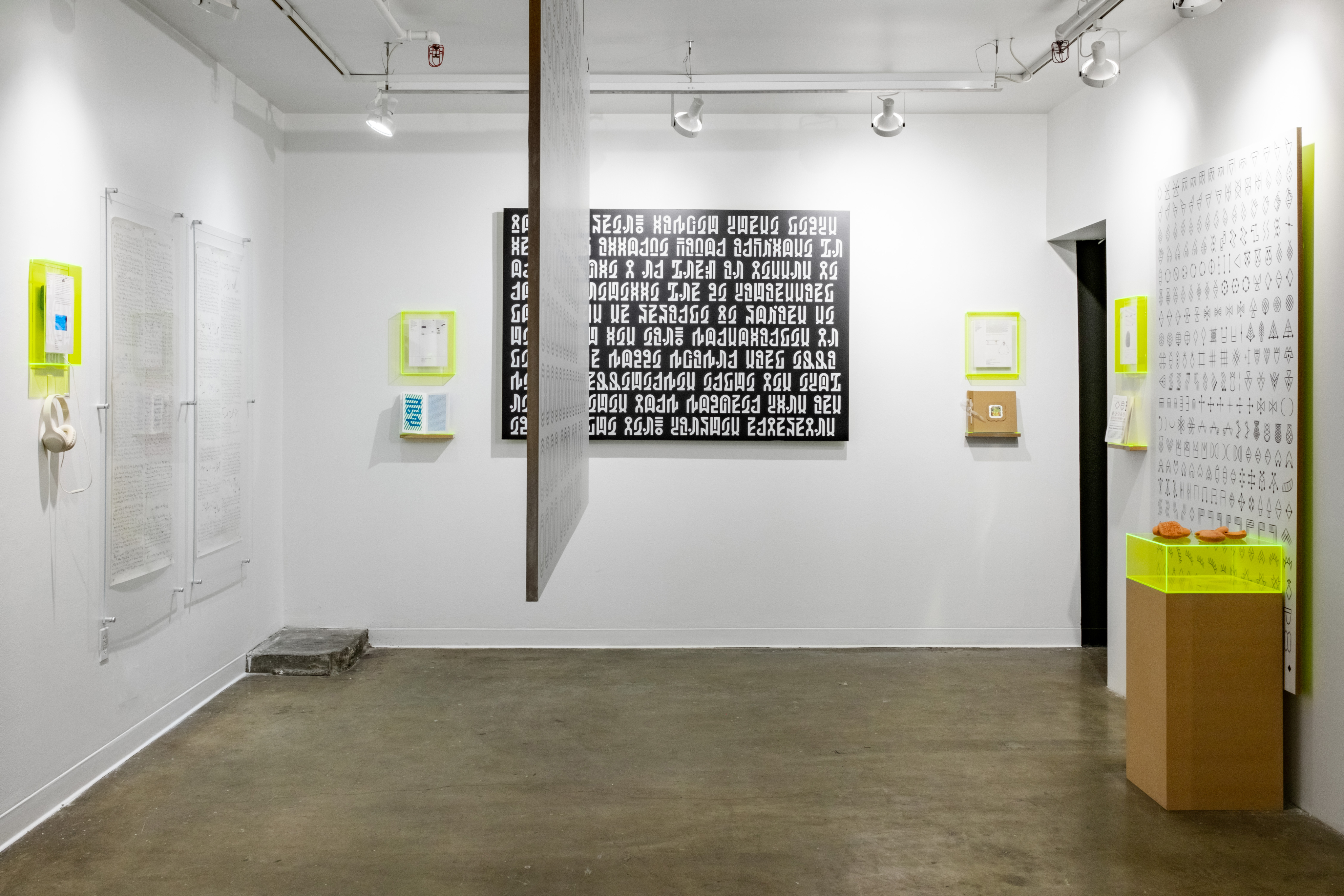
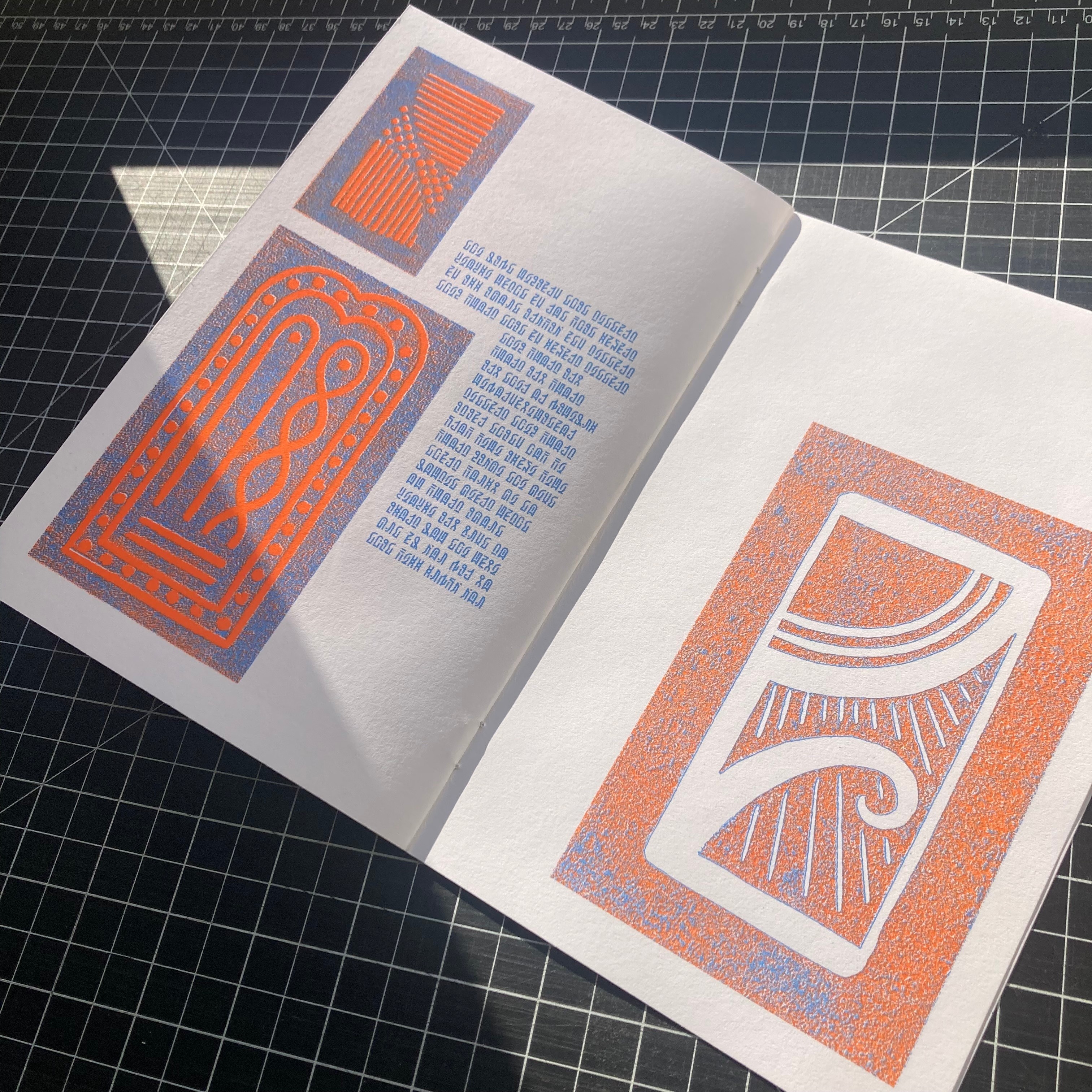
These two personal projects mix type design, graphic design and printmaking. They were completed in 2023 and 2024. They merge several practices I am particularly interested in: type design, book design, printmaking (risograph, linocut).
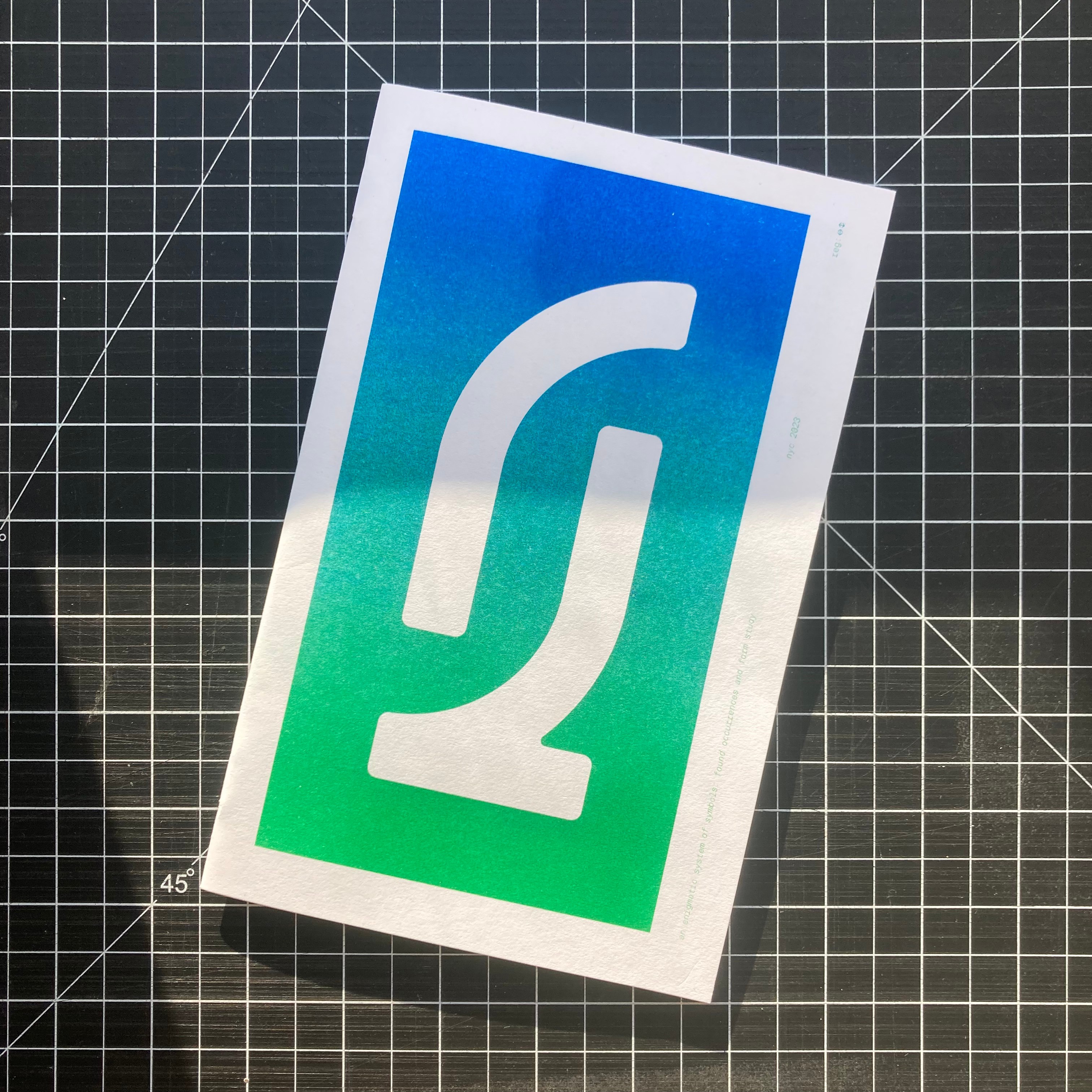
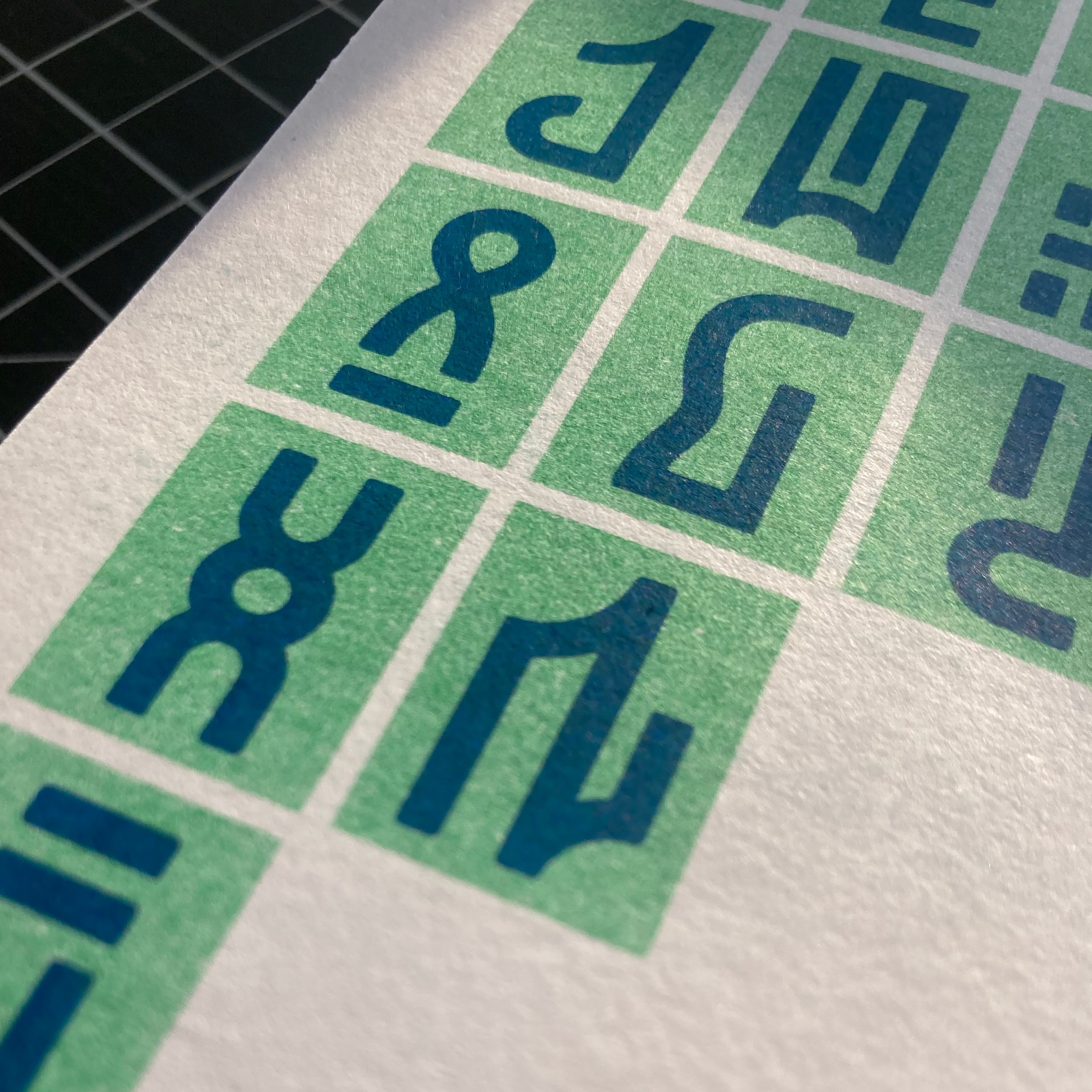
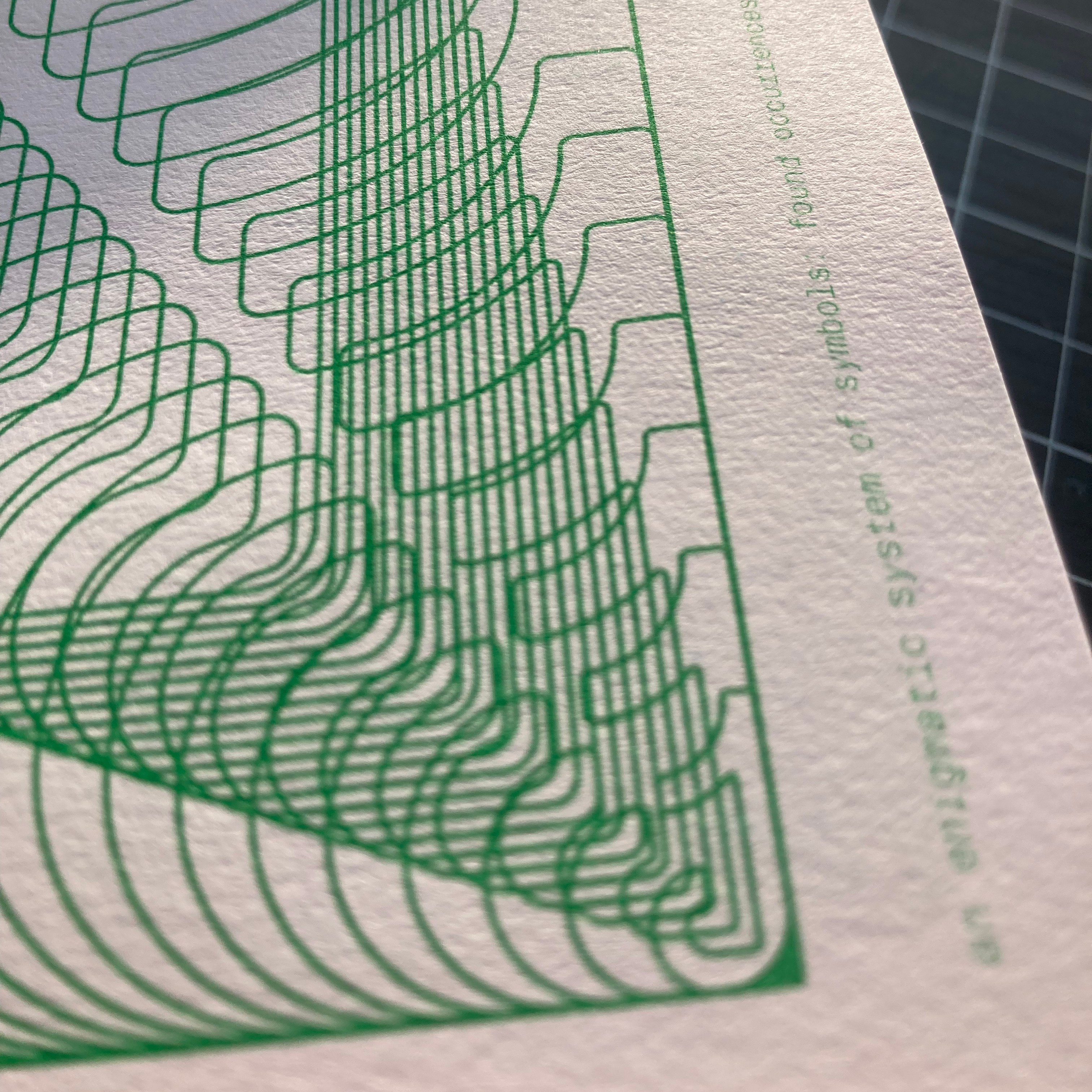
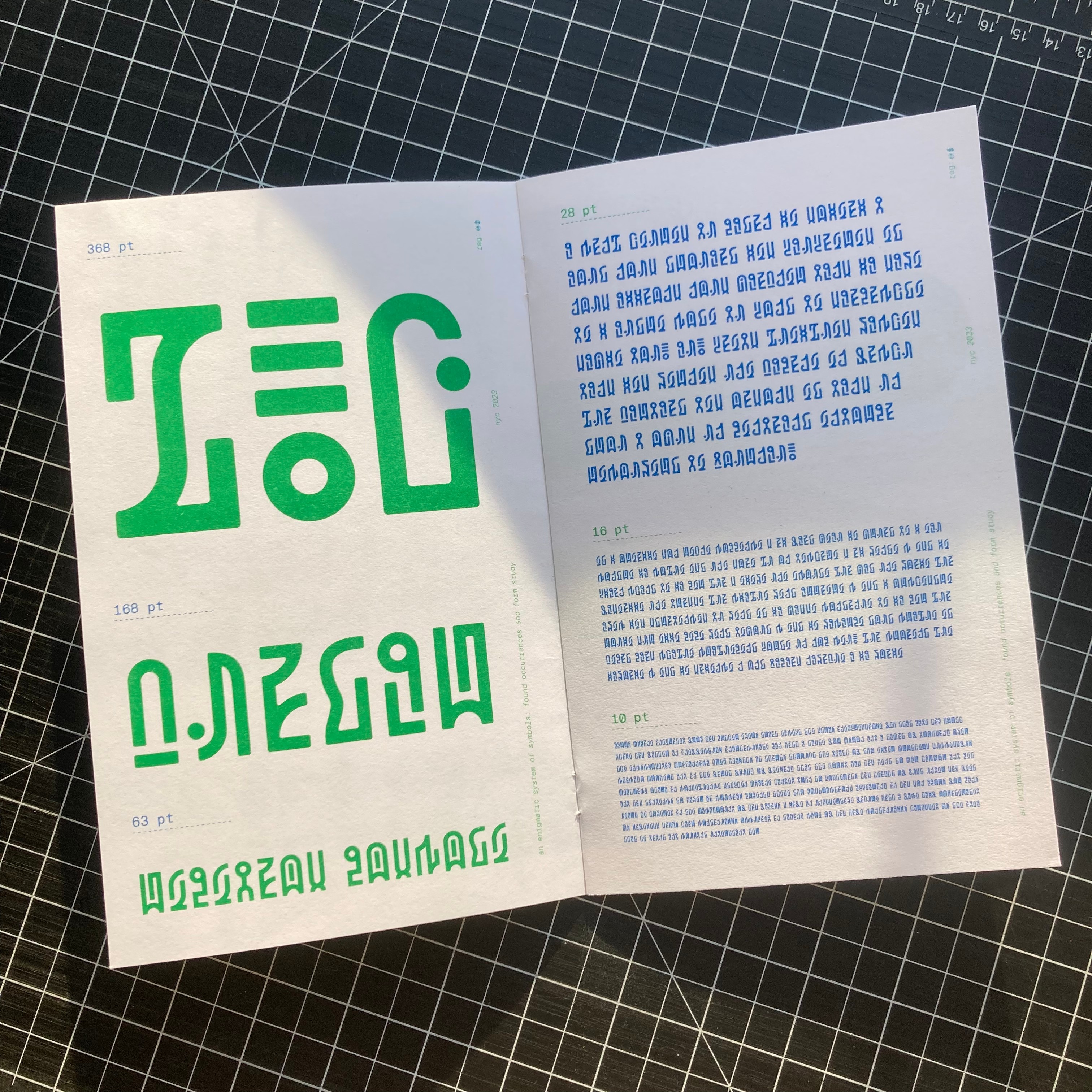
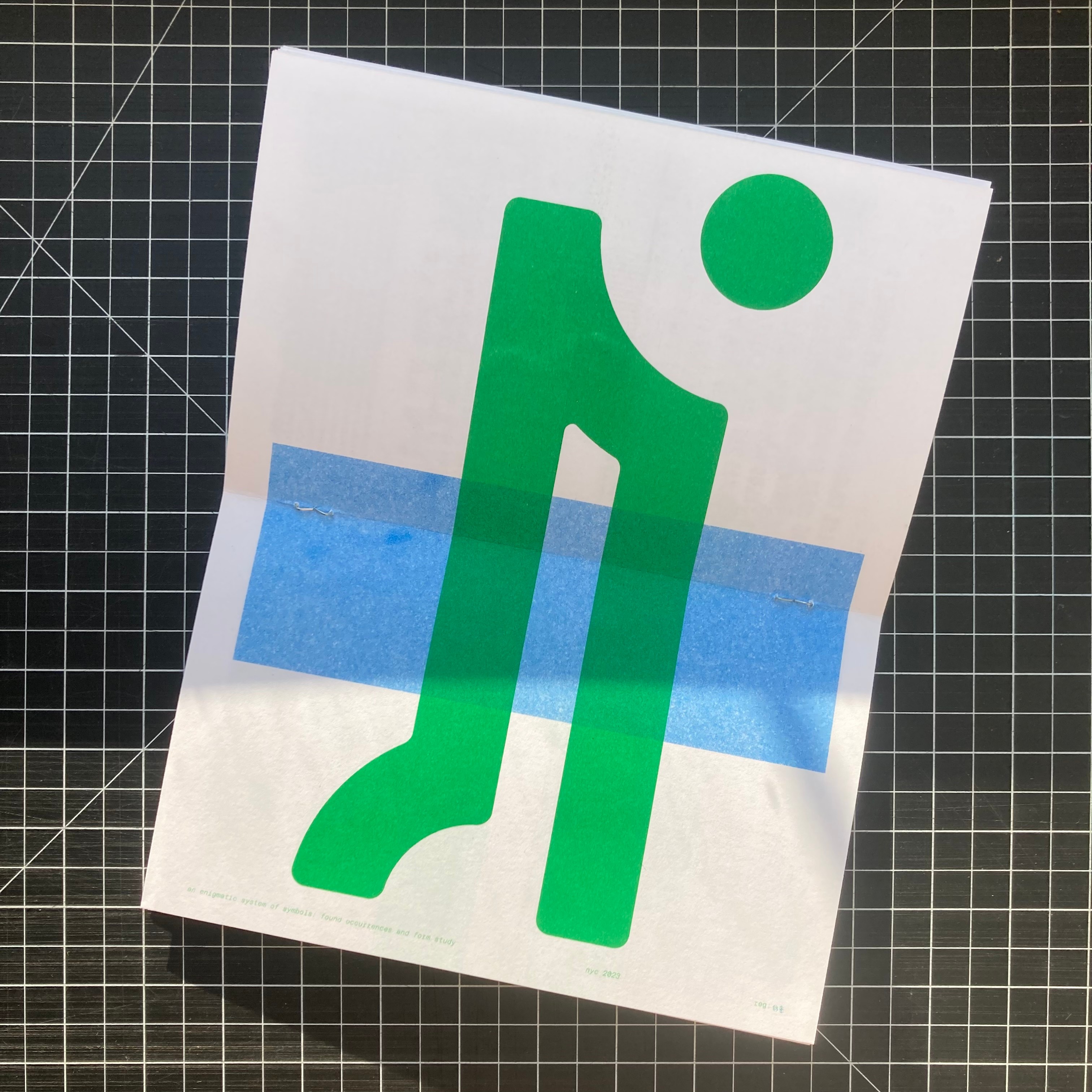
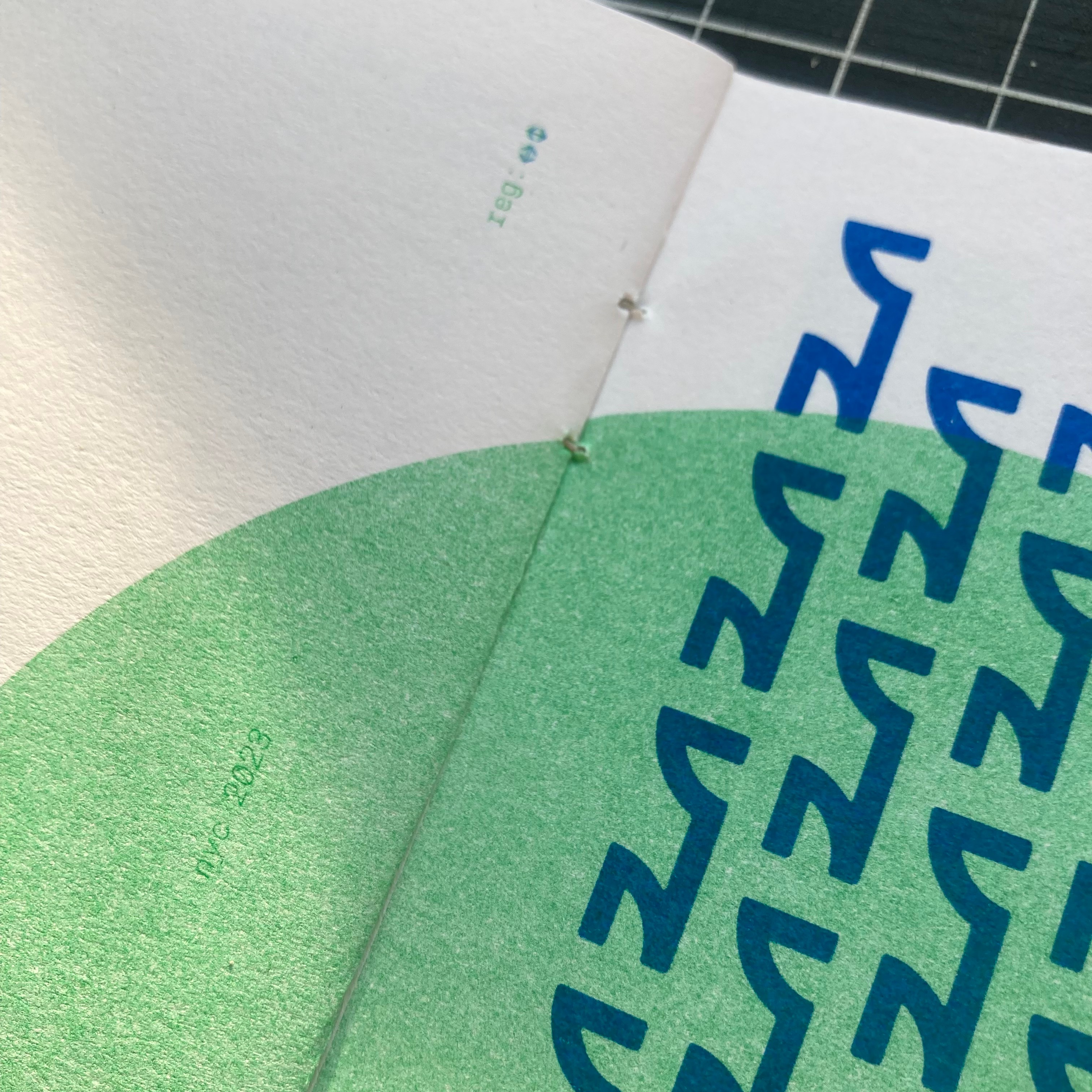
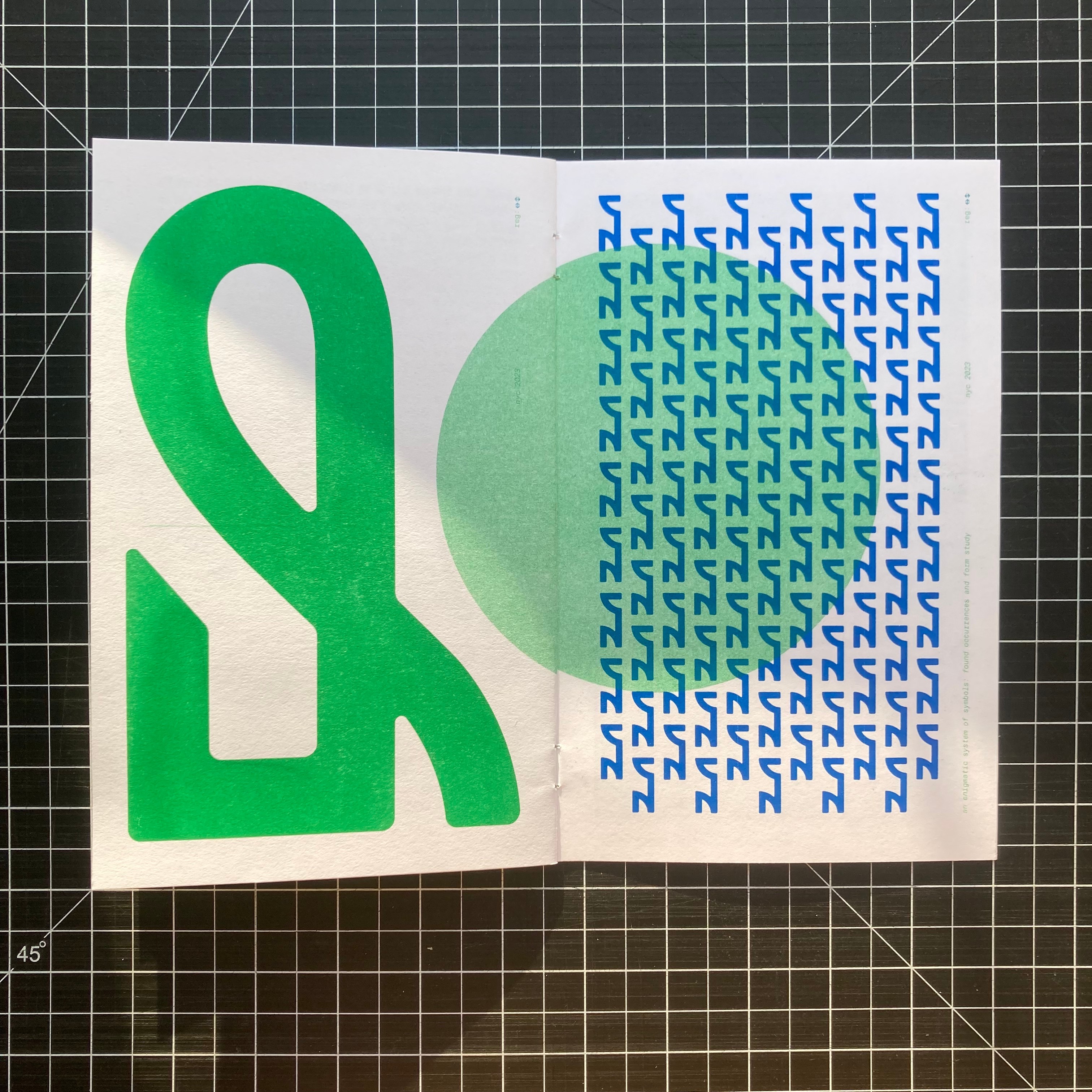
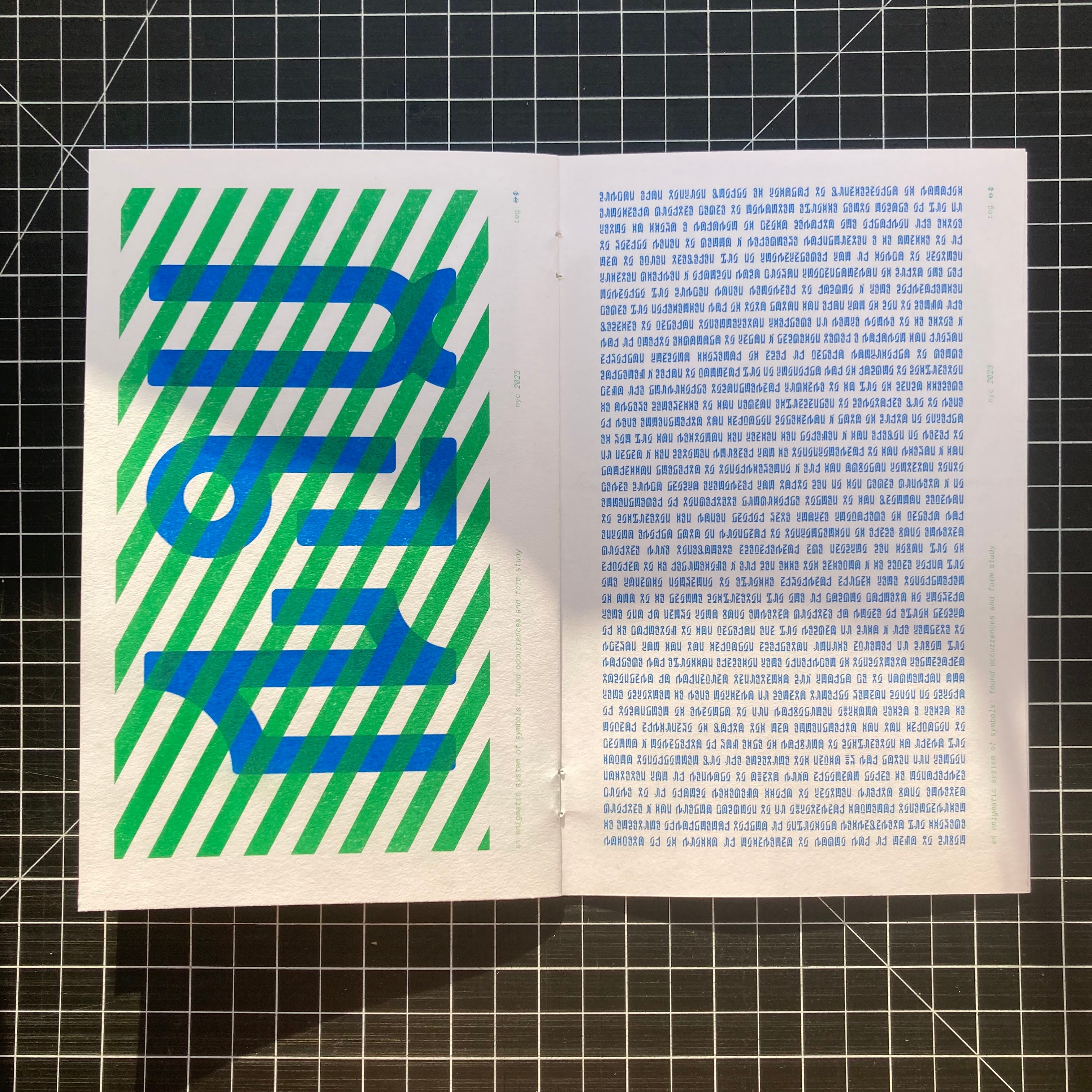
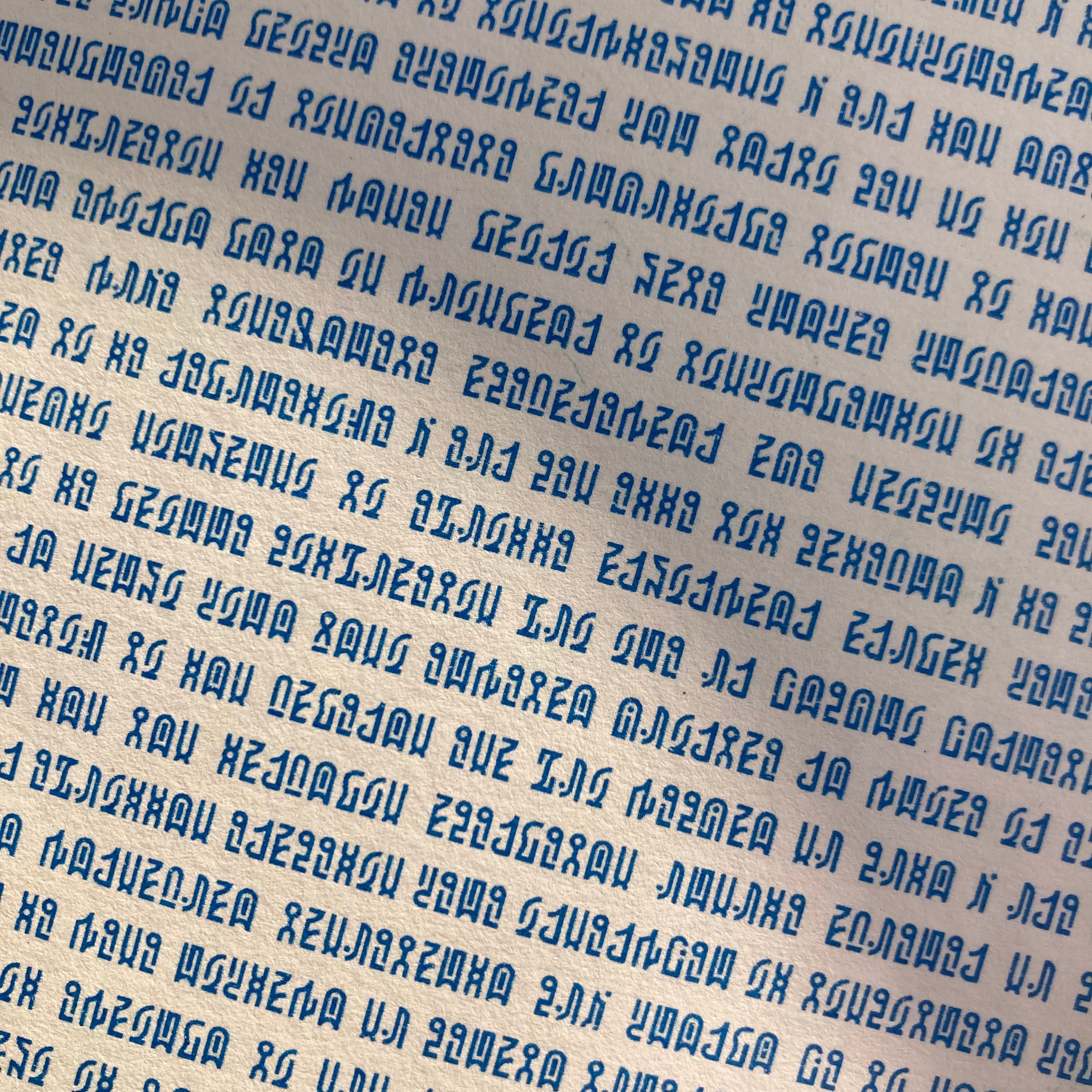
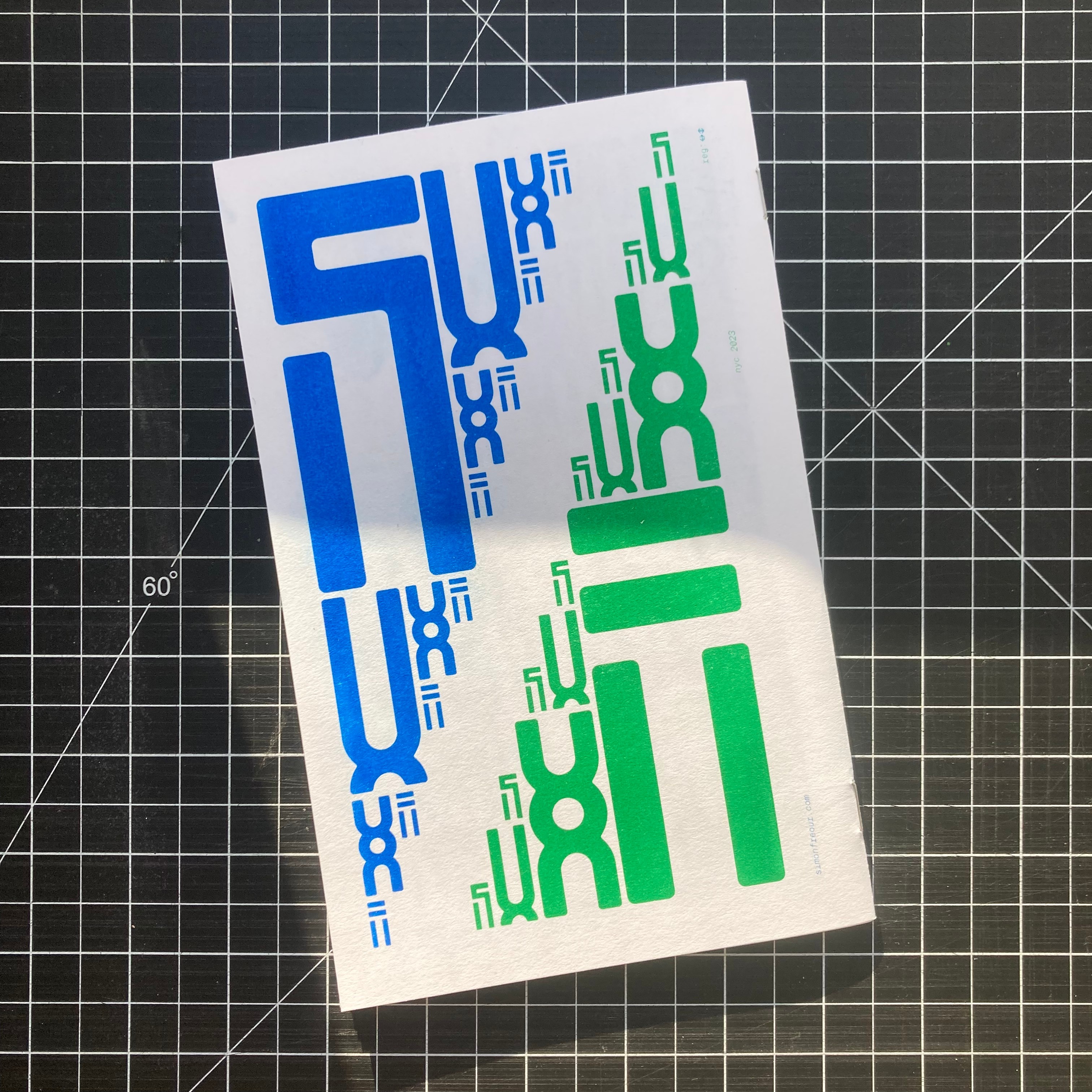
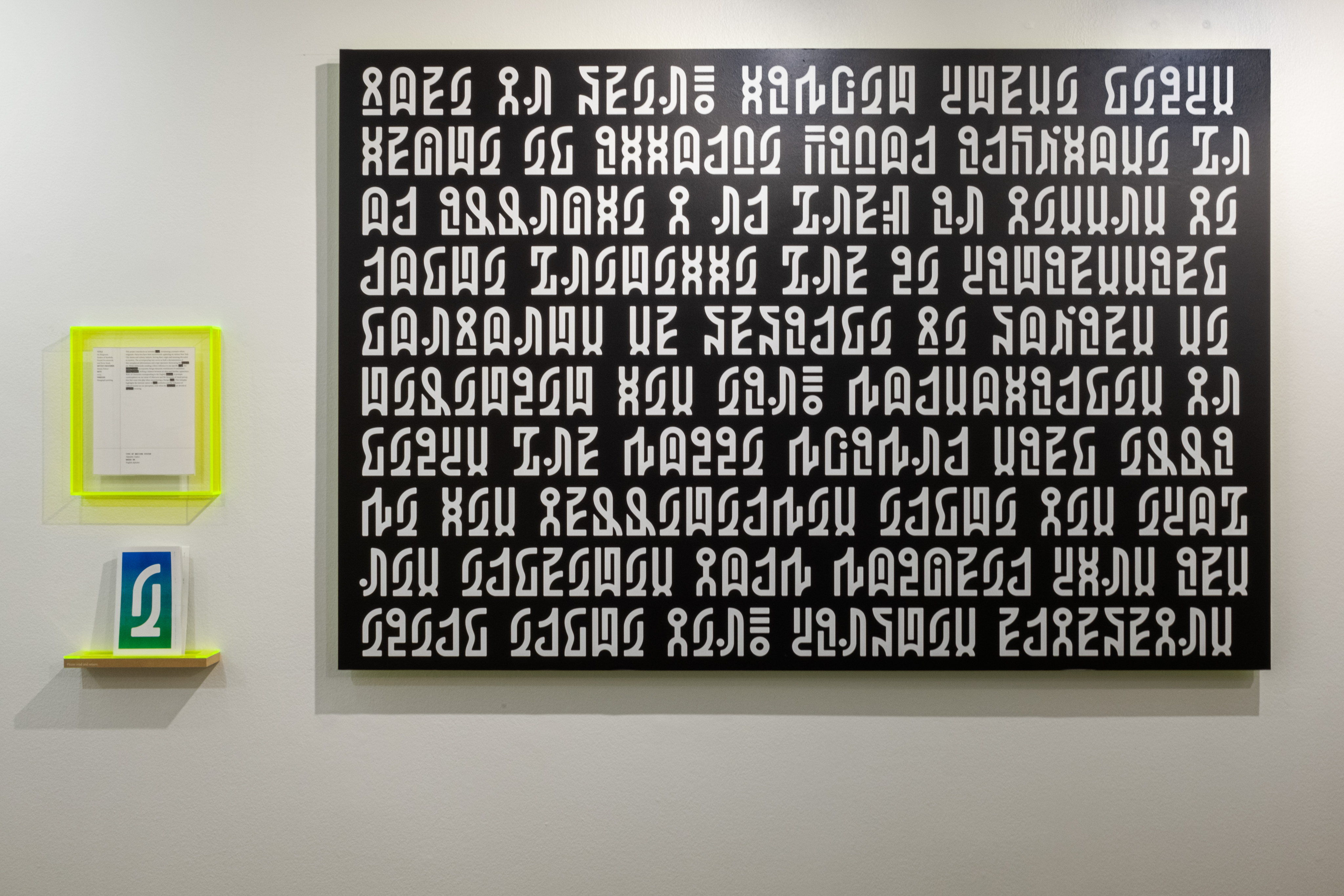
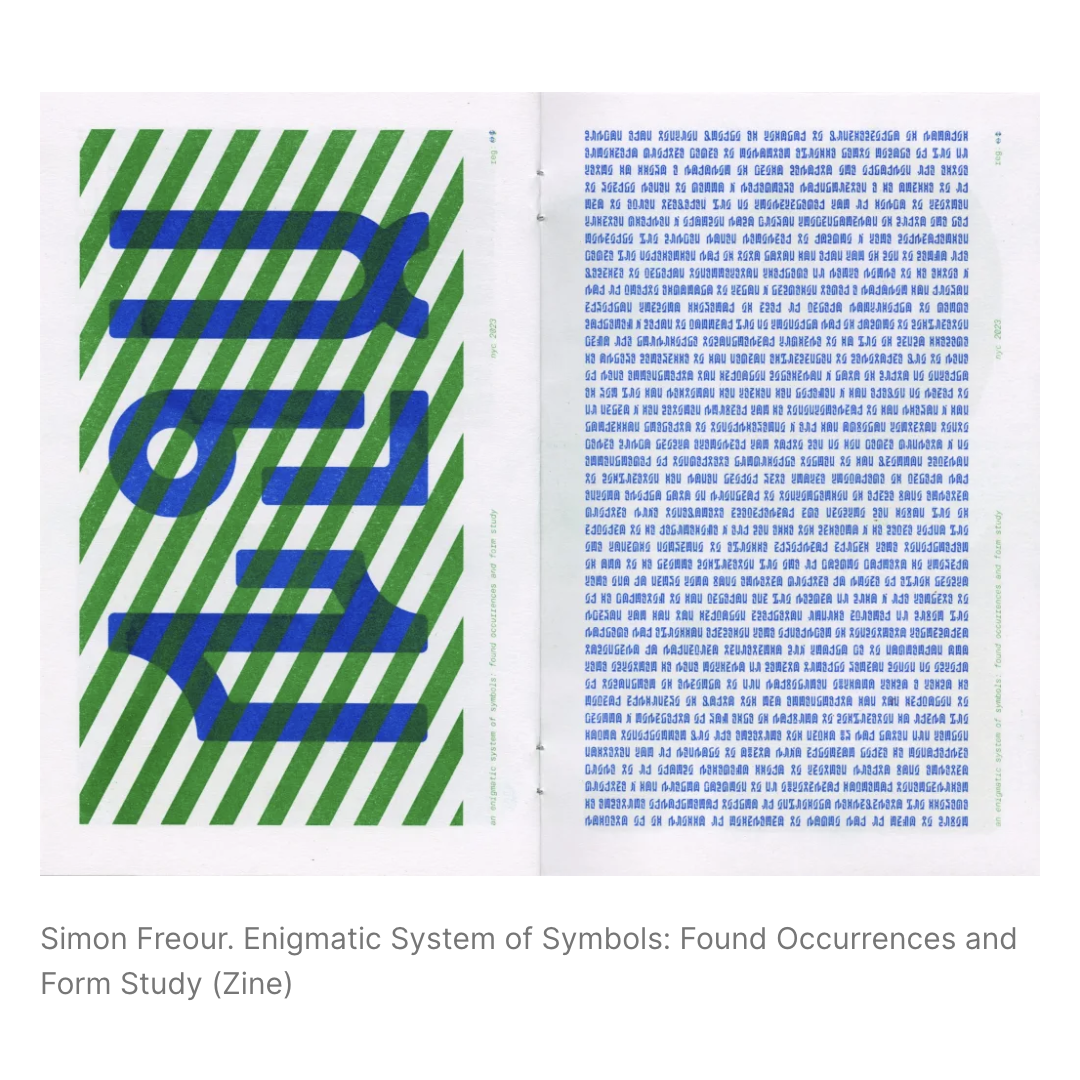
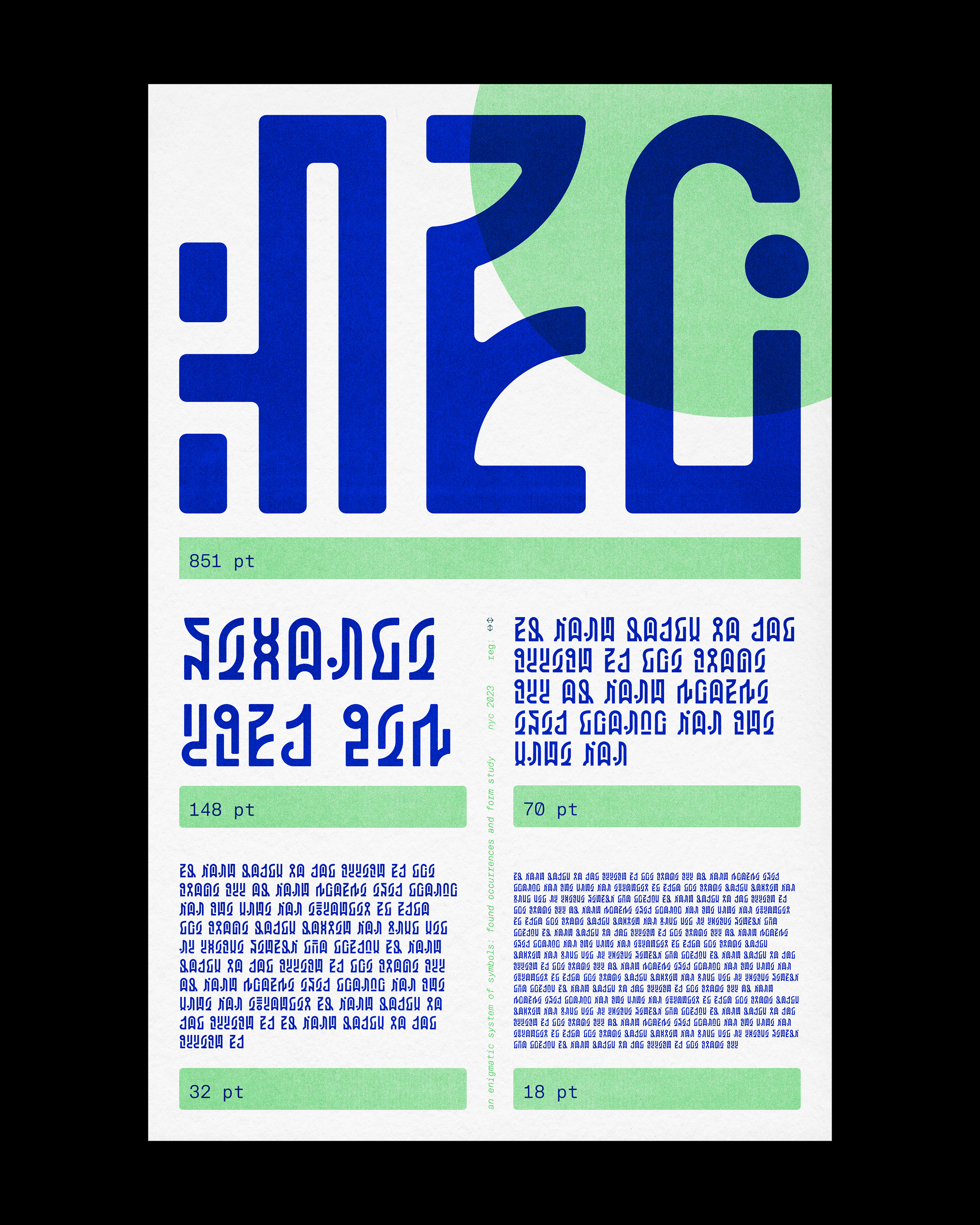
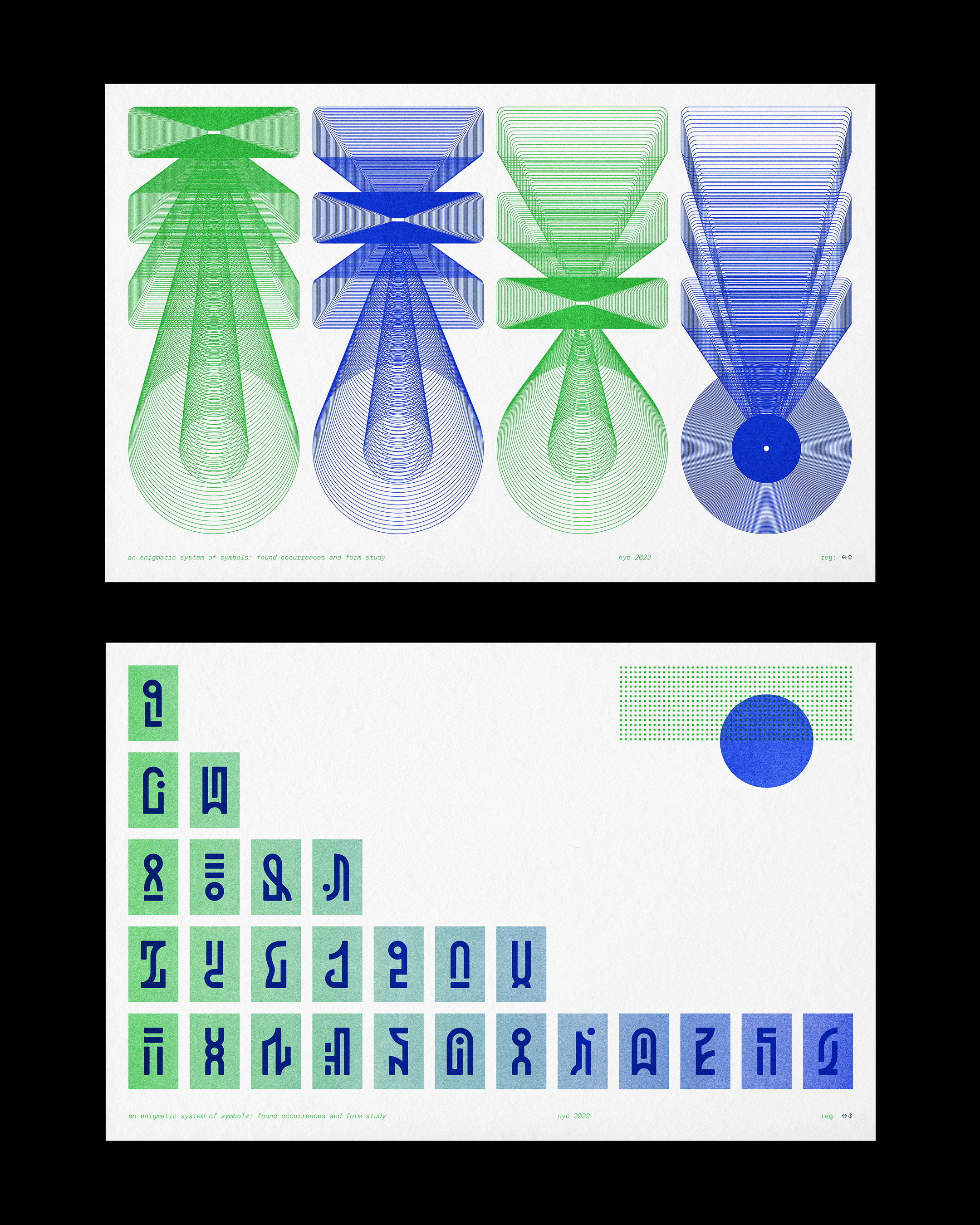
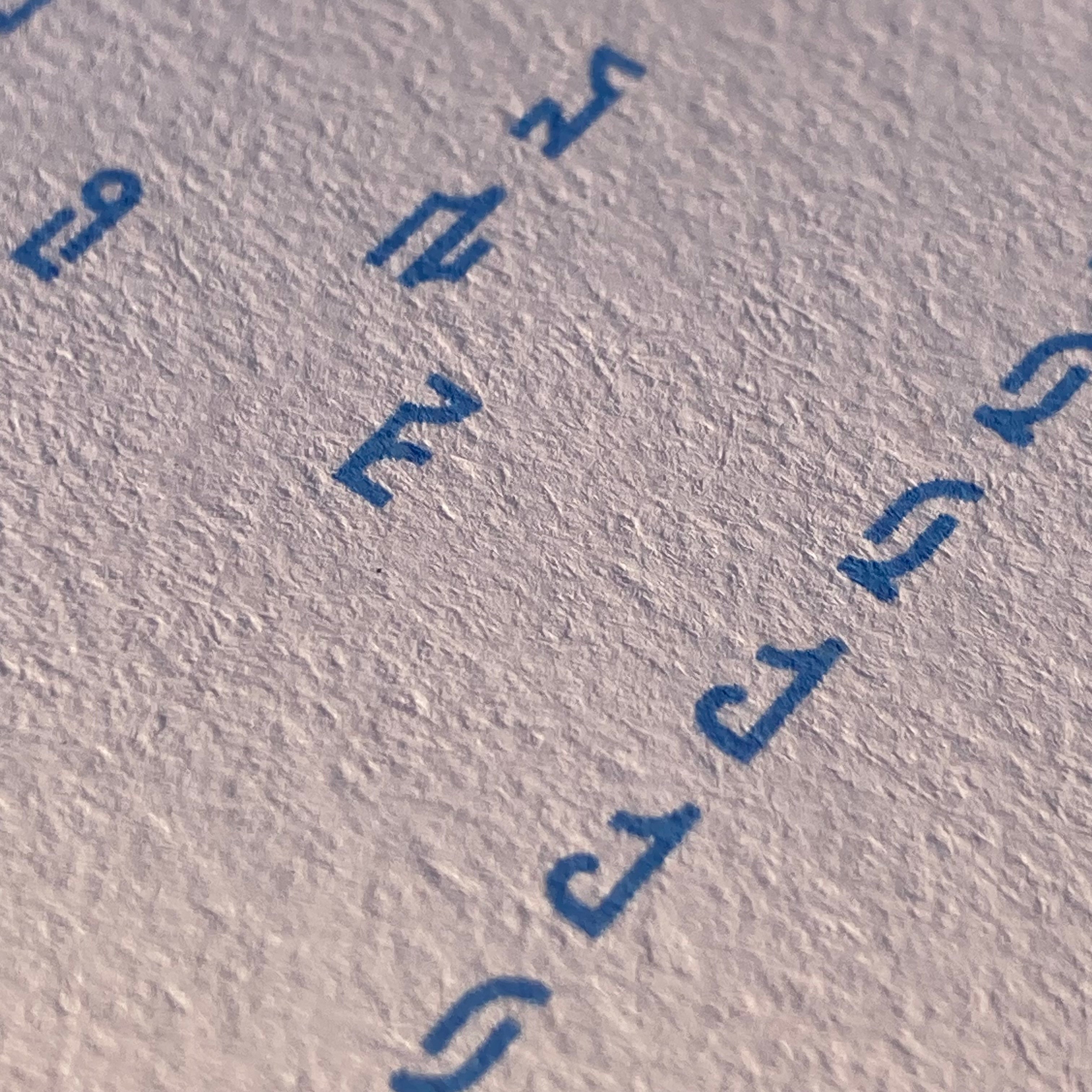
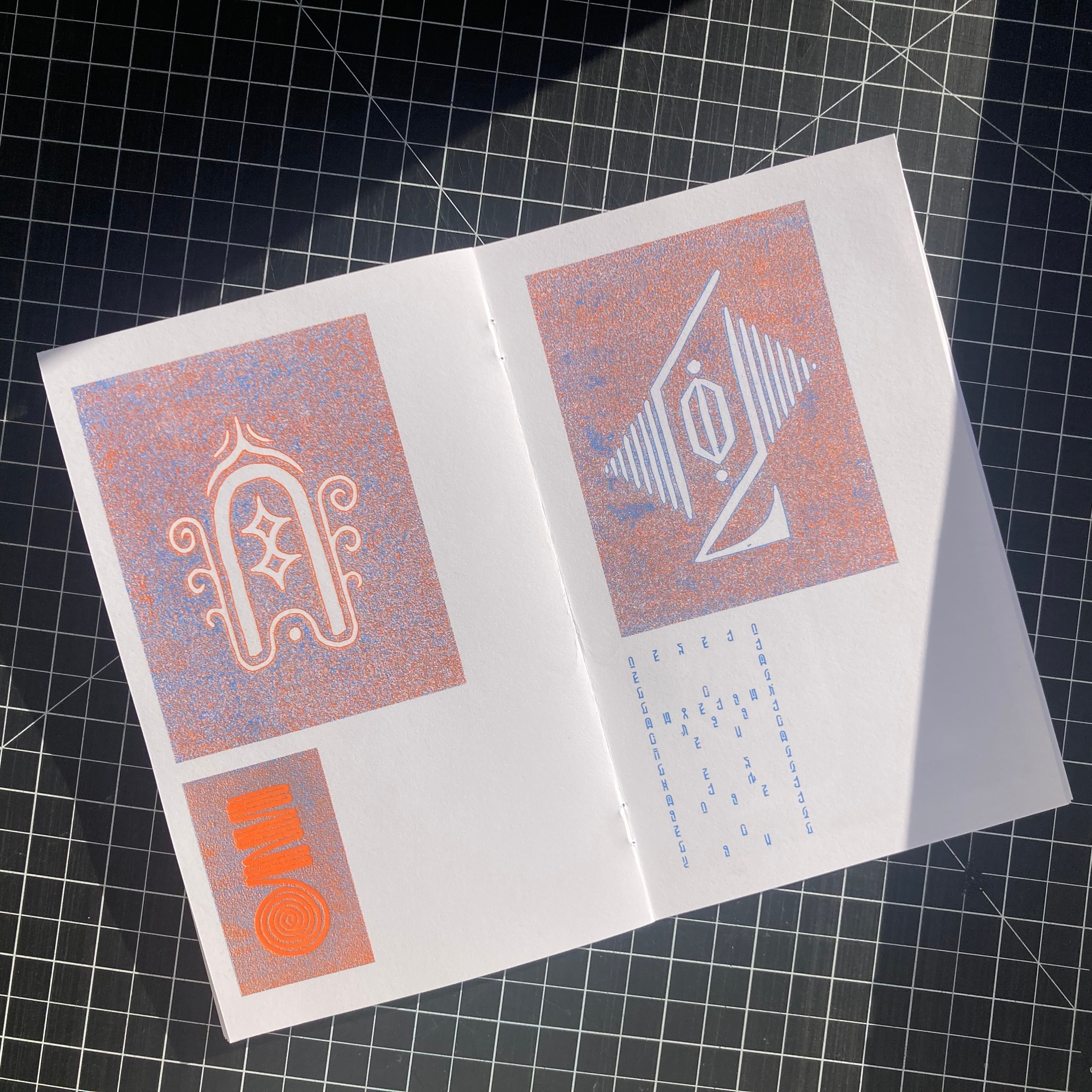
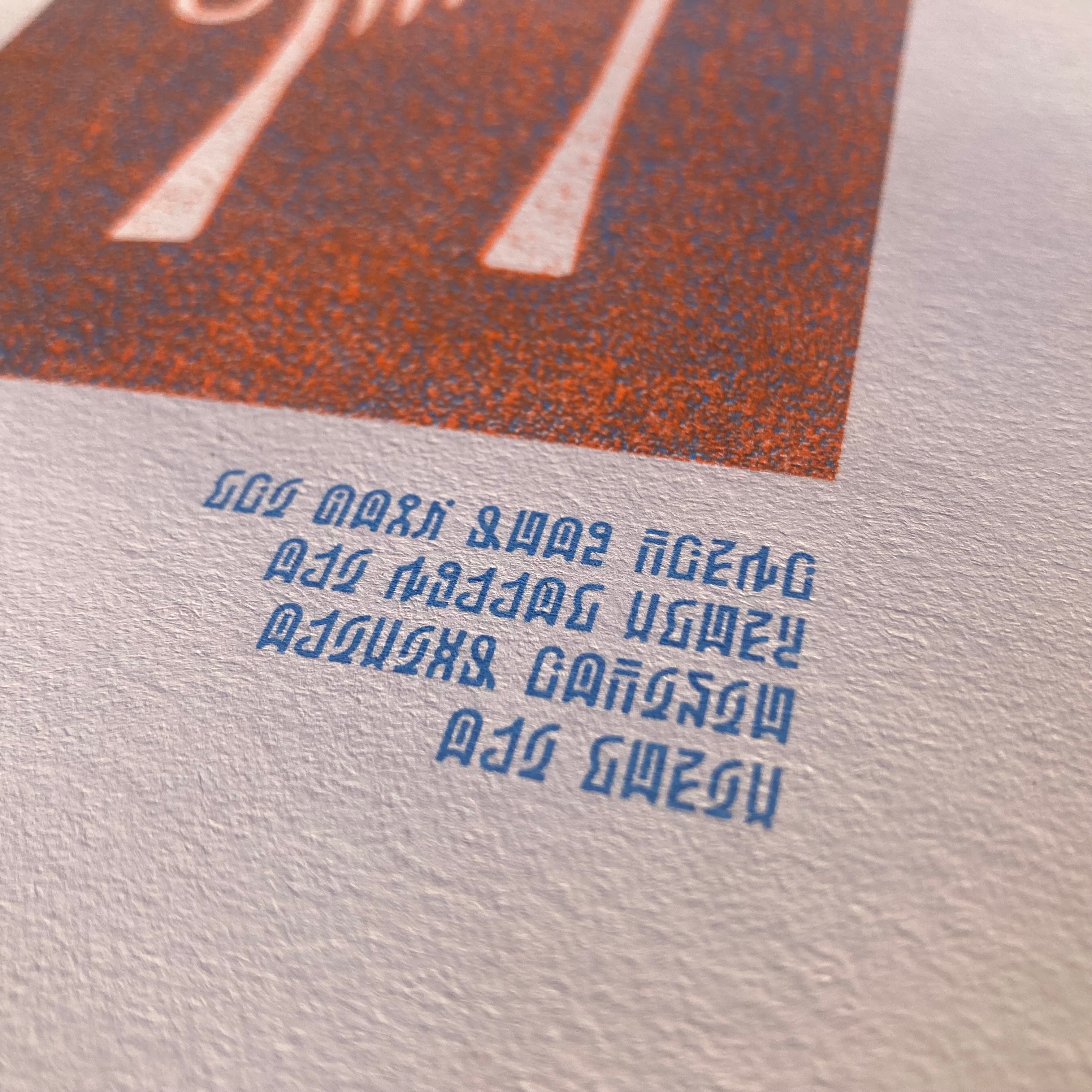
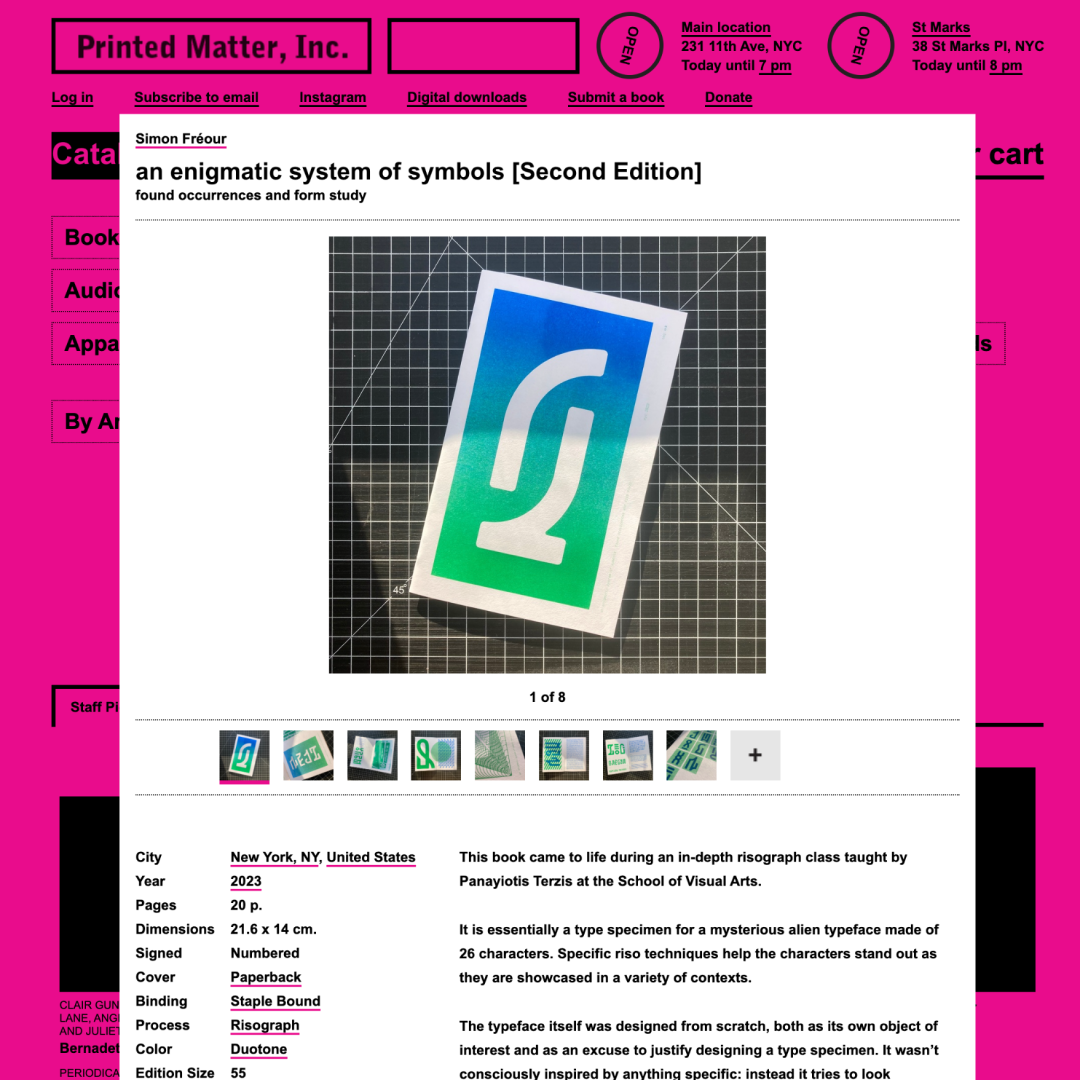
The first book, Enigmatic System of Symbols: Found Occurrences and Form Study, is a risograph-printed type specimen of an invented 26-character script. The script itself explores the idea of familiarity in characters: it is entirely unreadable and wasn't knowingly inspired by any existing script, yet it feels strangely familiar to most—but why?
The type specimen itself is formally more conventional: a design artifact we are used to containing alien things. A type specimen usually contains meaningless text we can read; this one contains meaningful text no one can read. Only I know what it says.
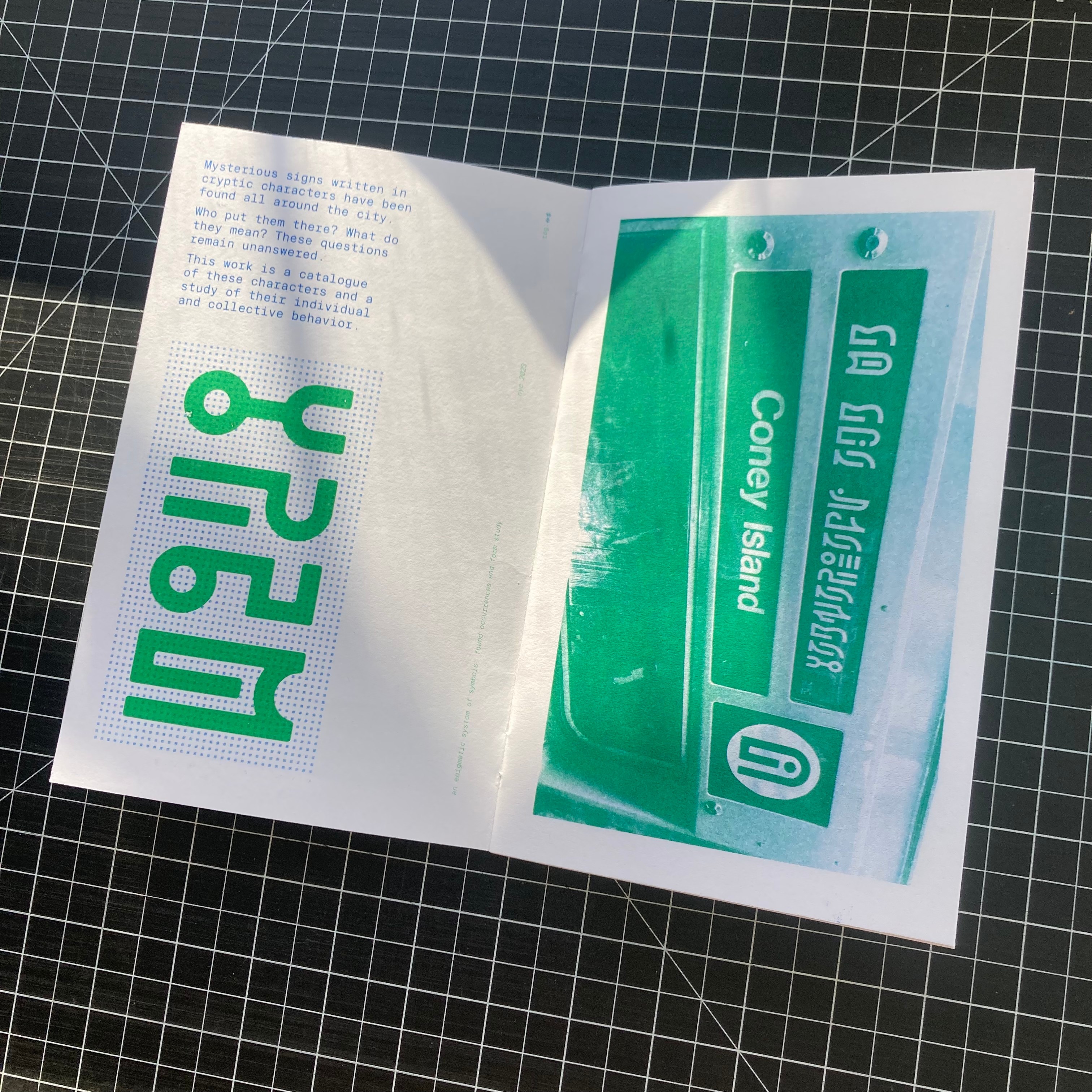
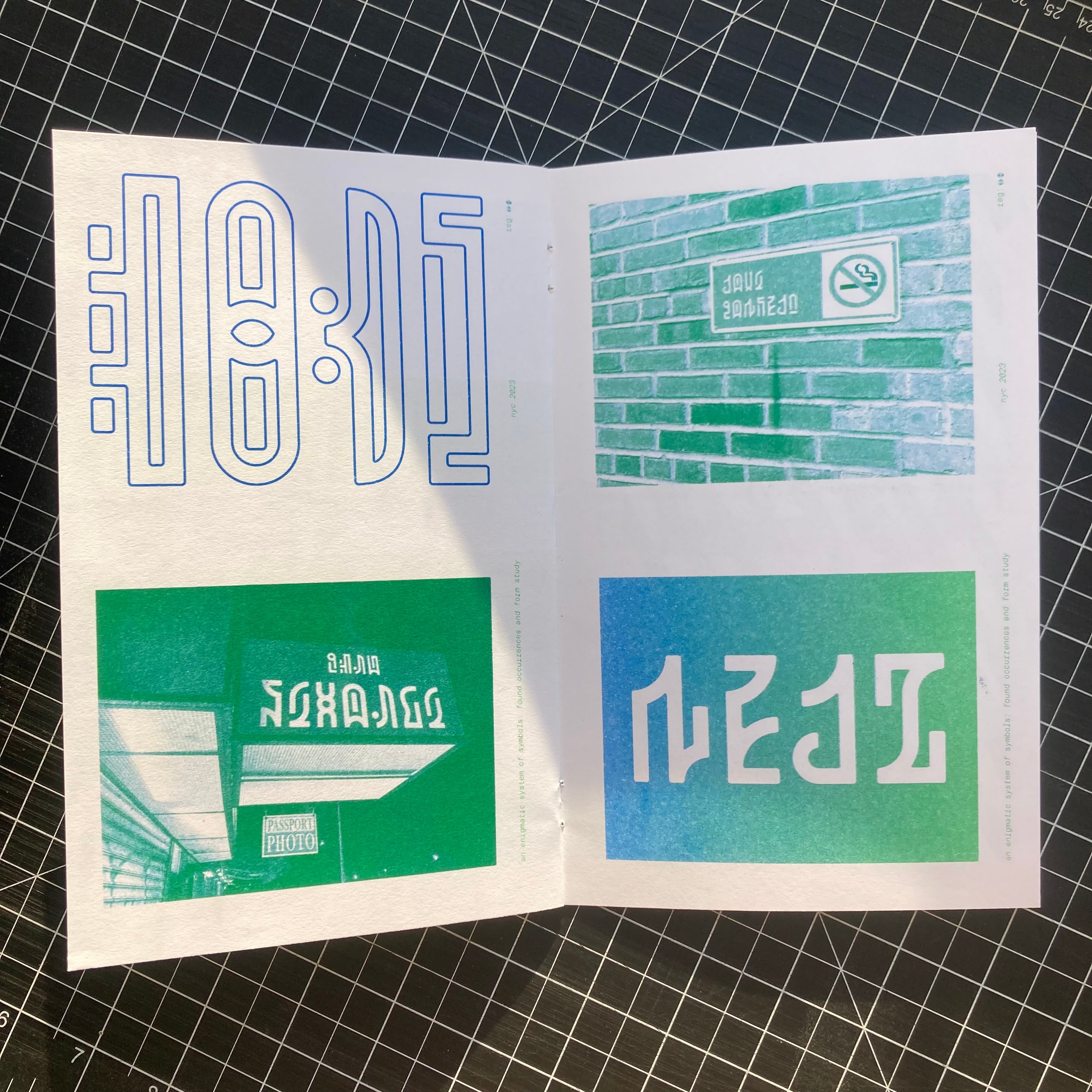
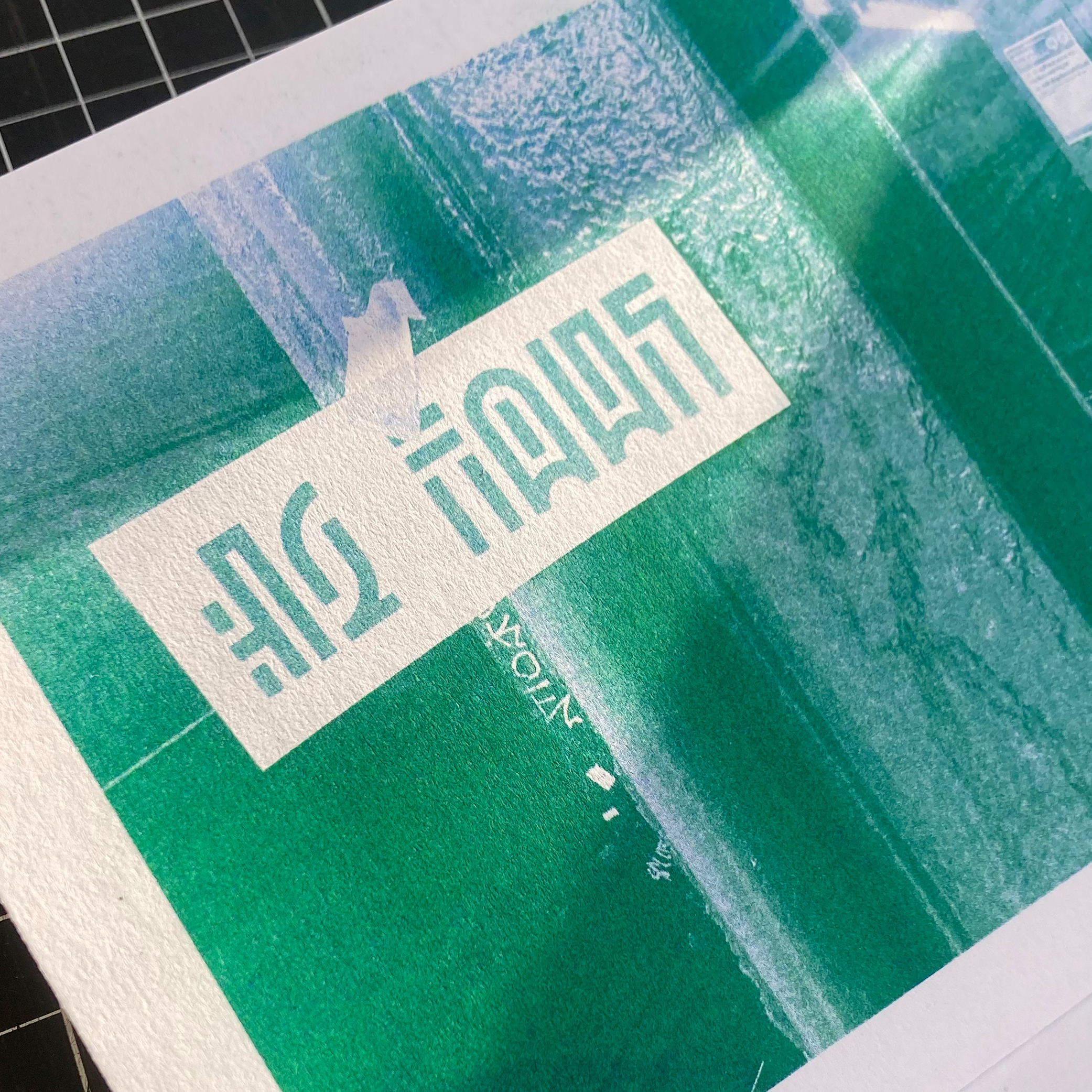
It features mockups of the script appearing unexpectedly in familiar places in New York, one of the most diverse places in the world, where we see text we can't read every day.
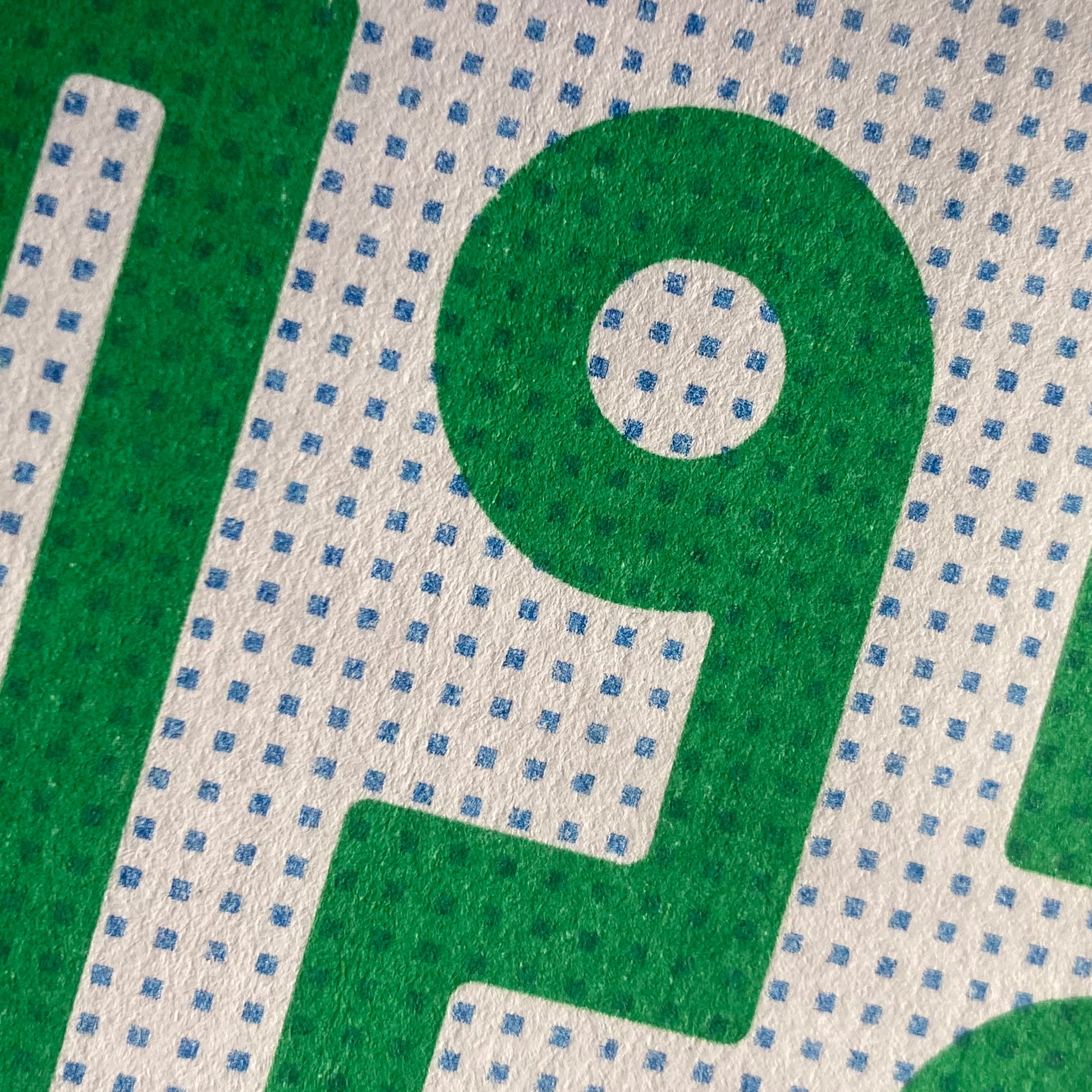
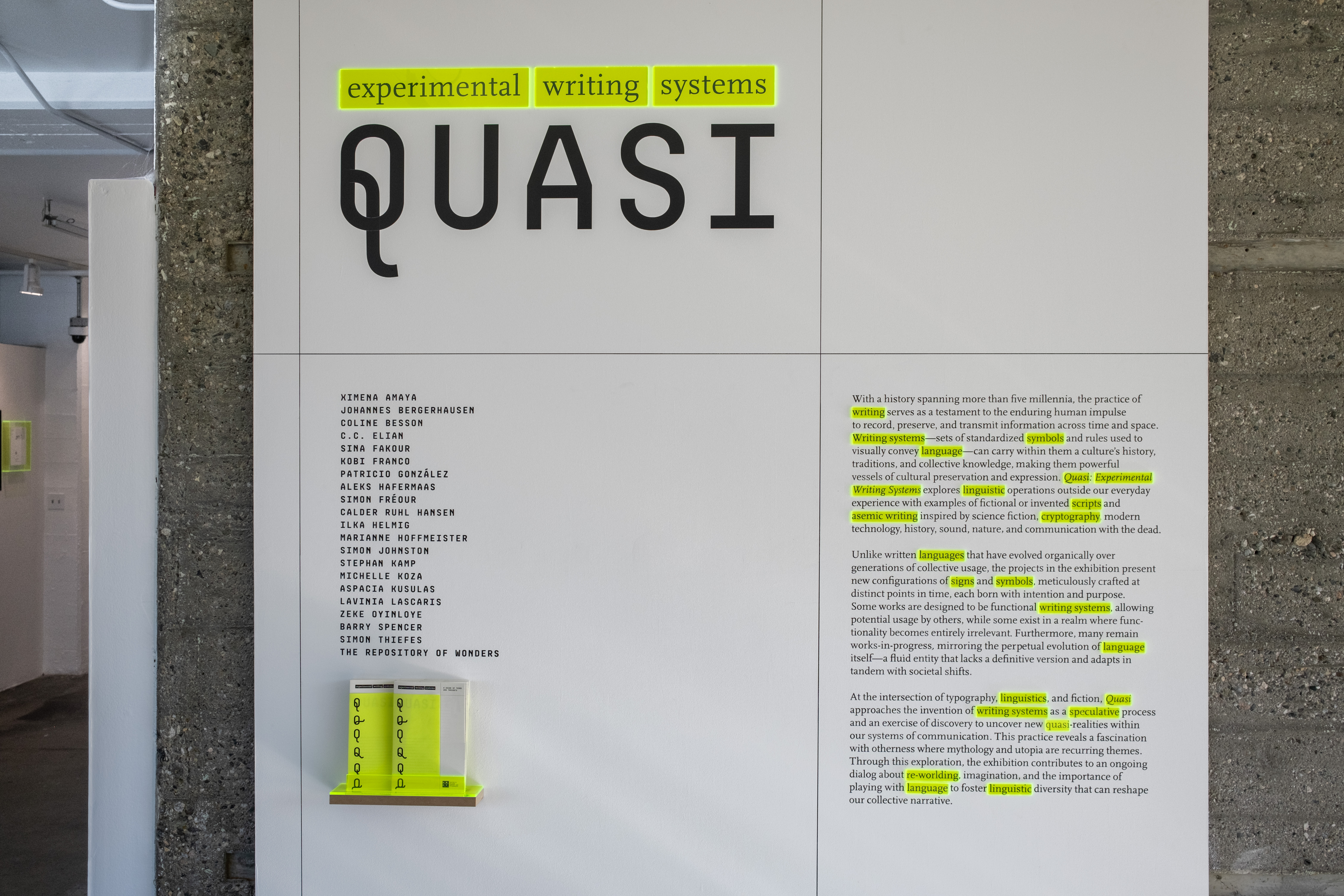
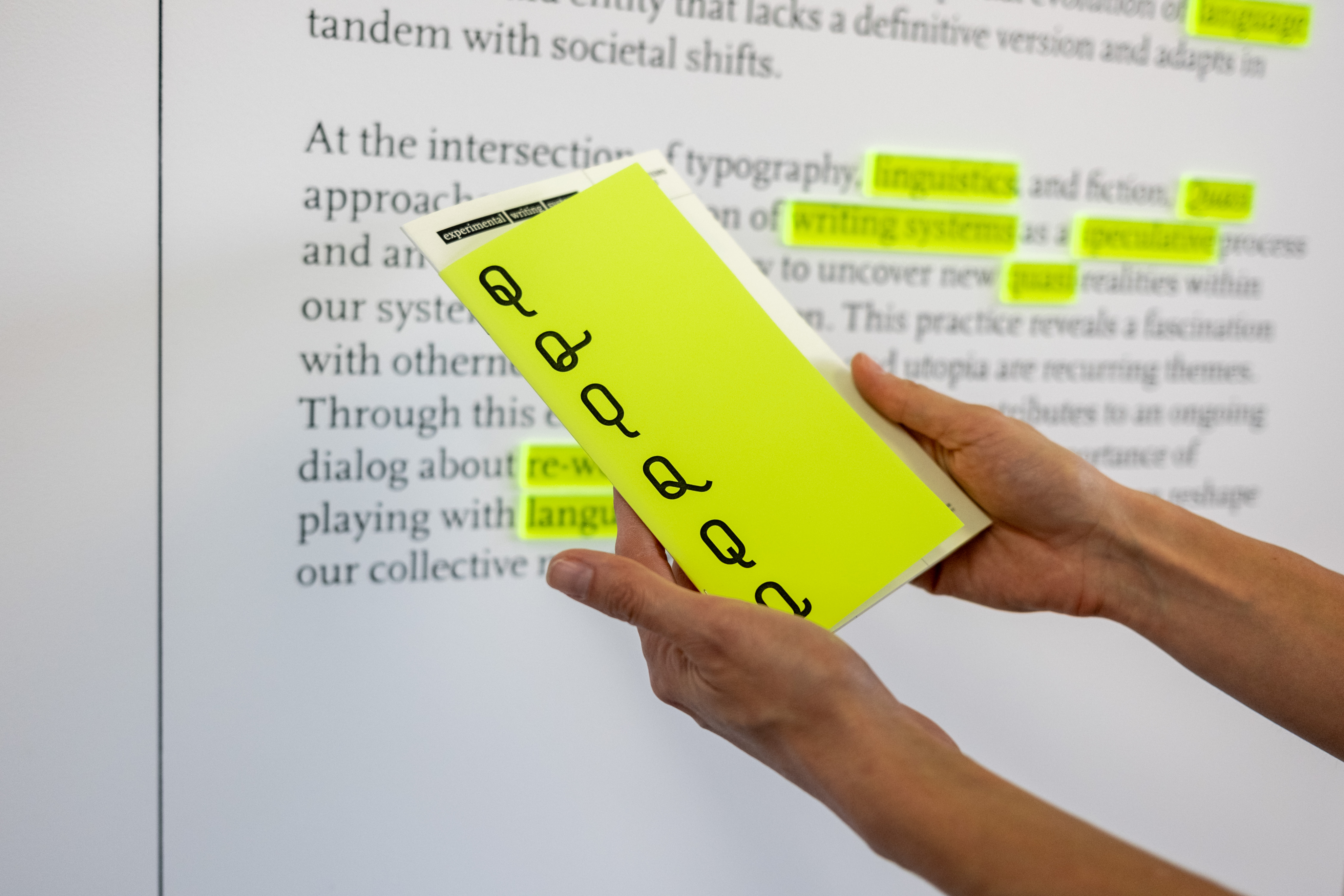
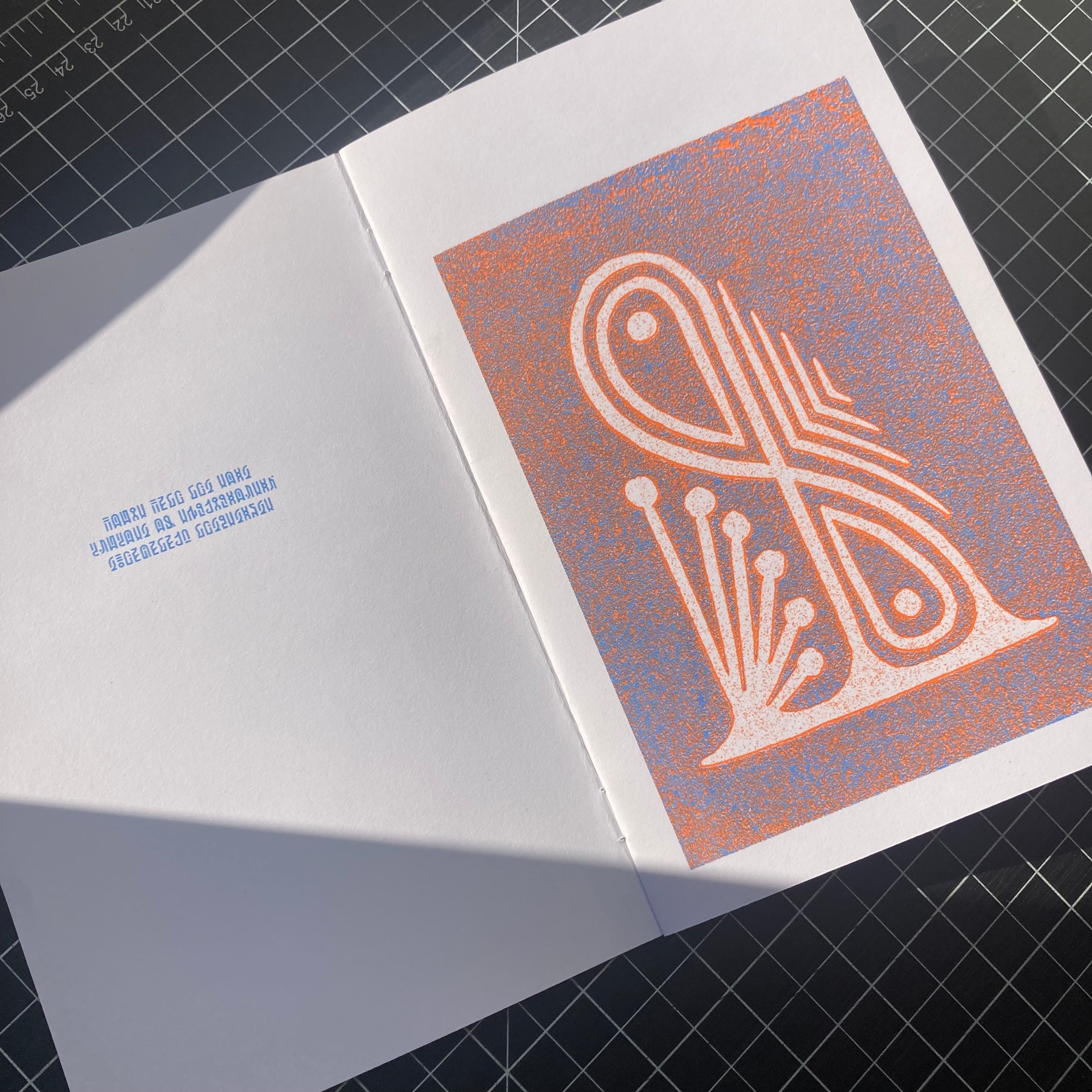
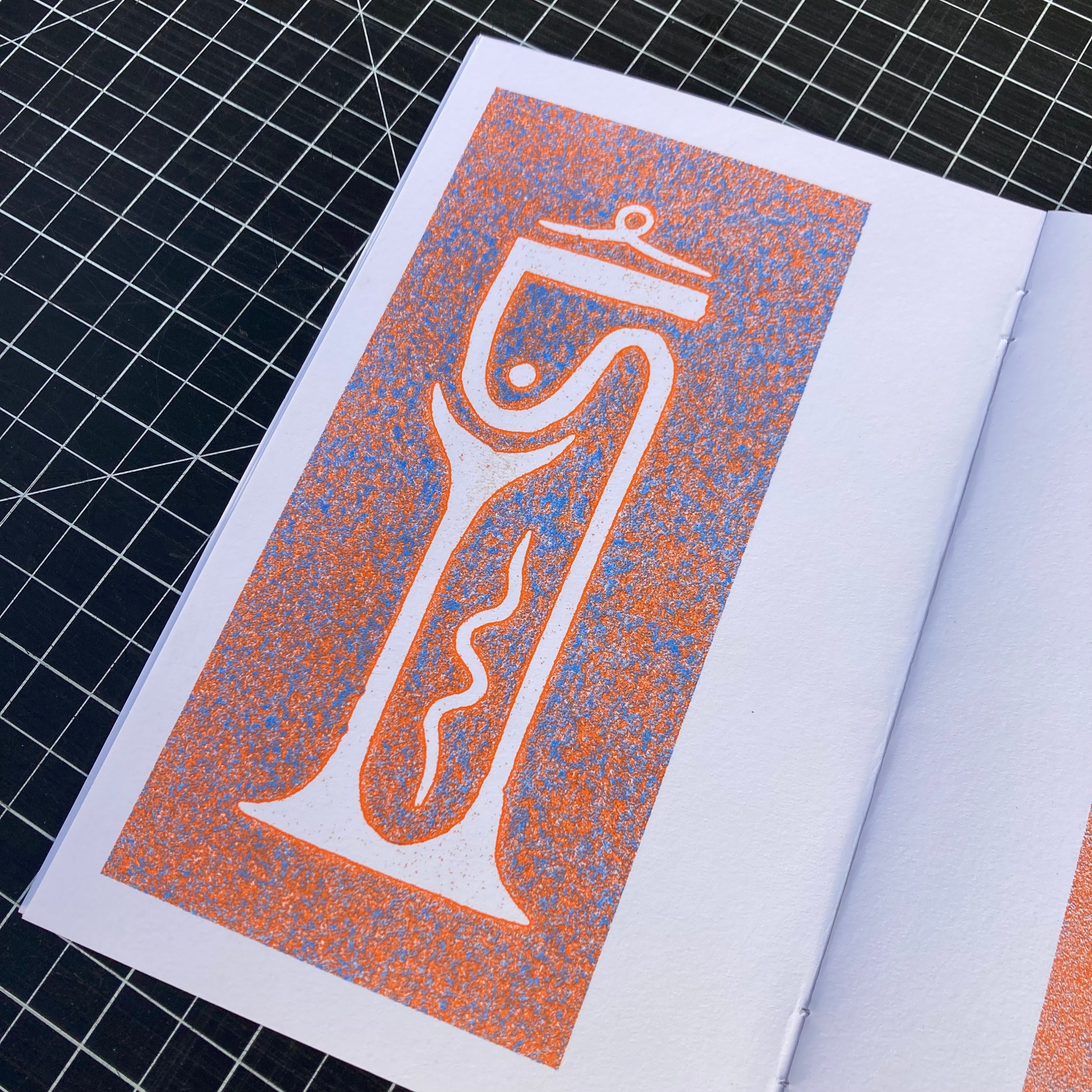
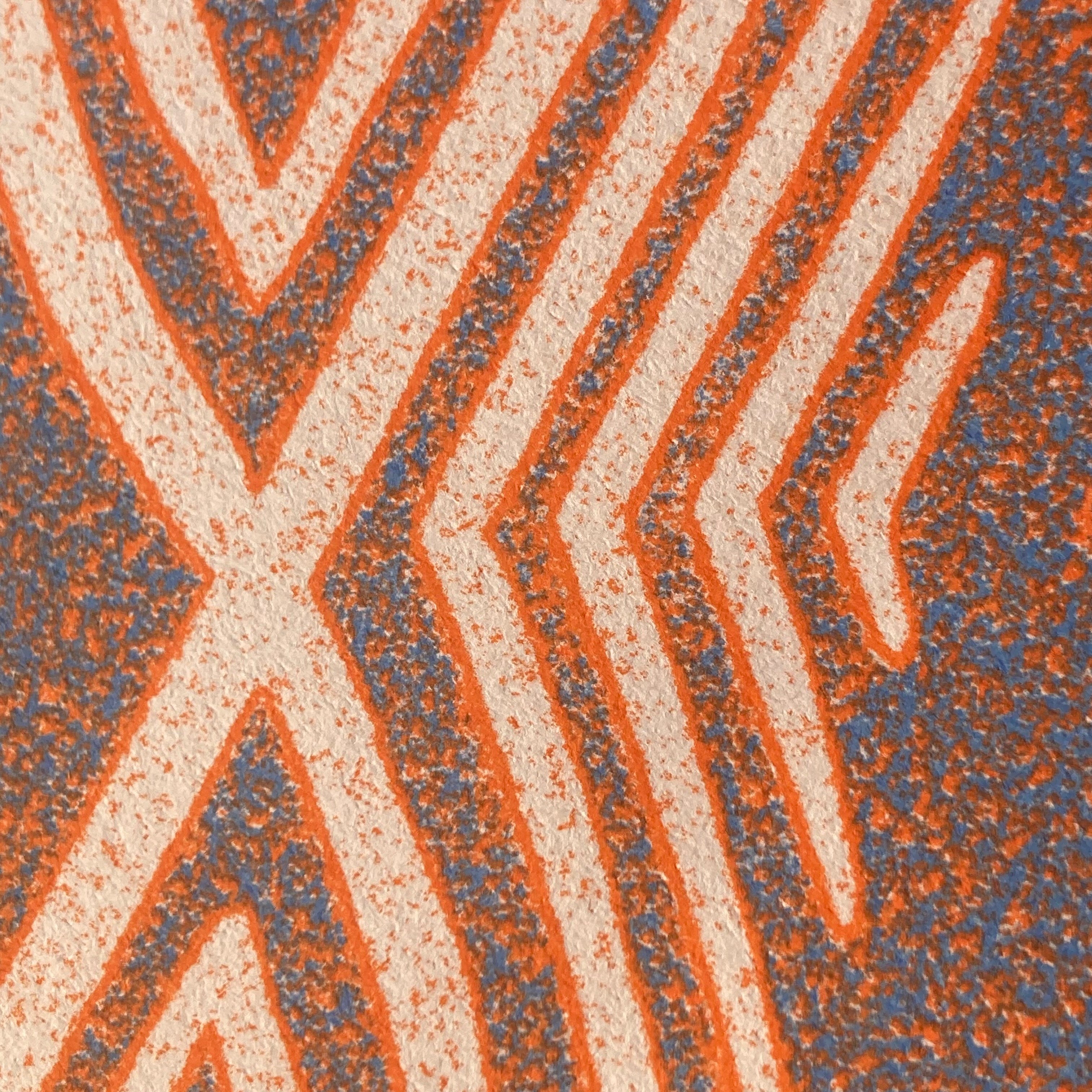
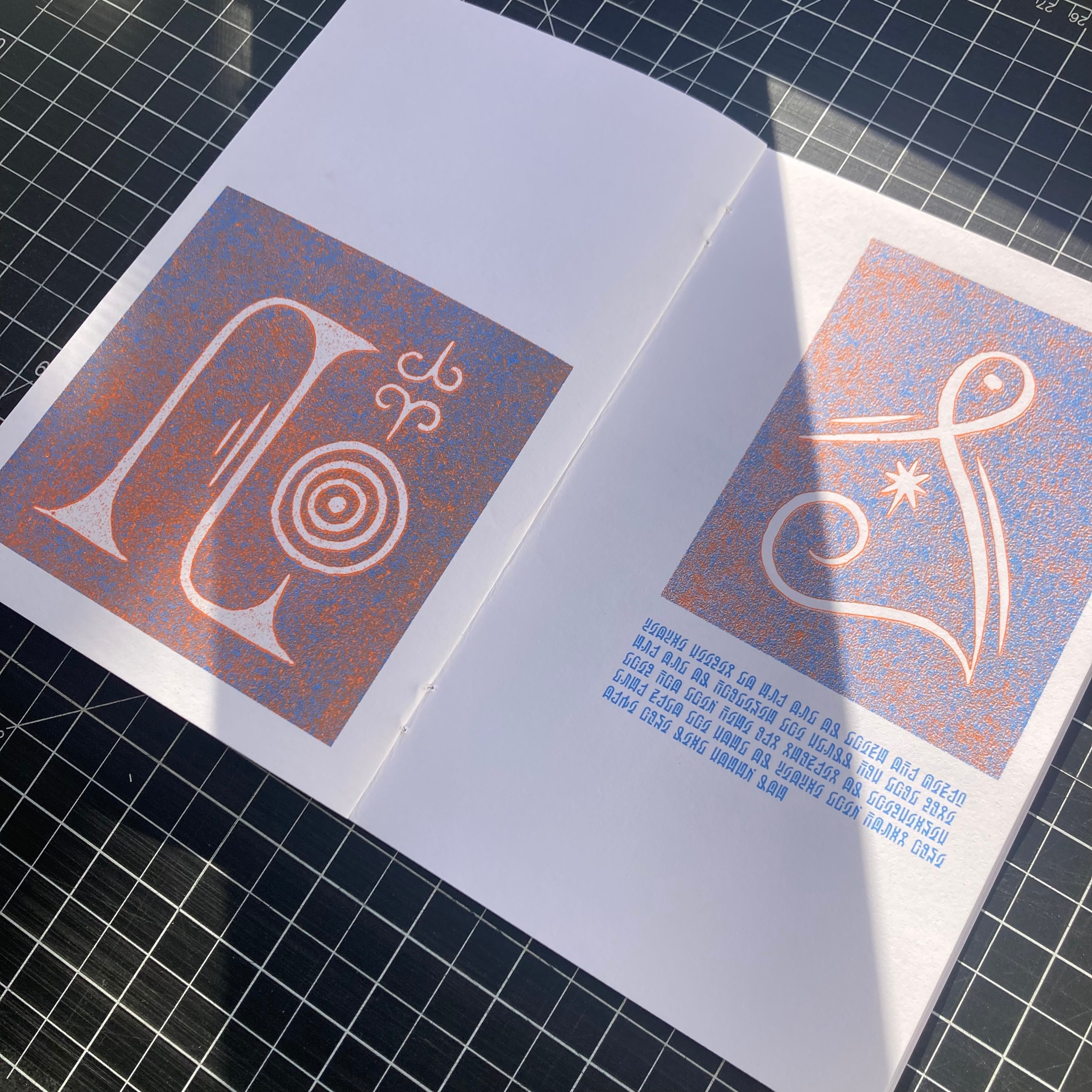
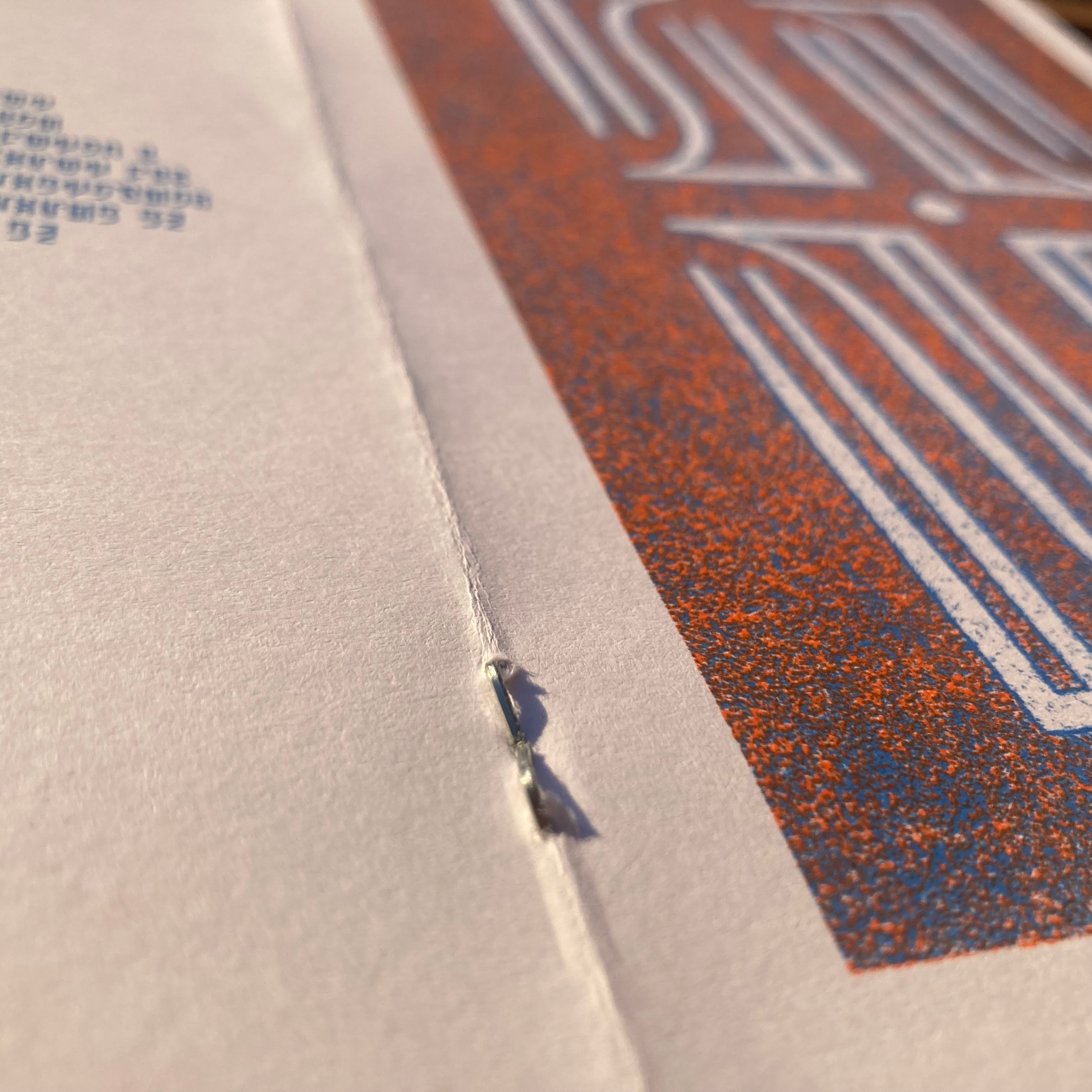
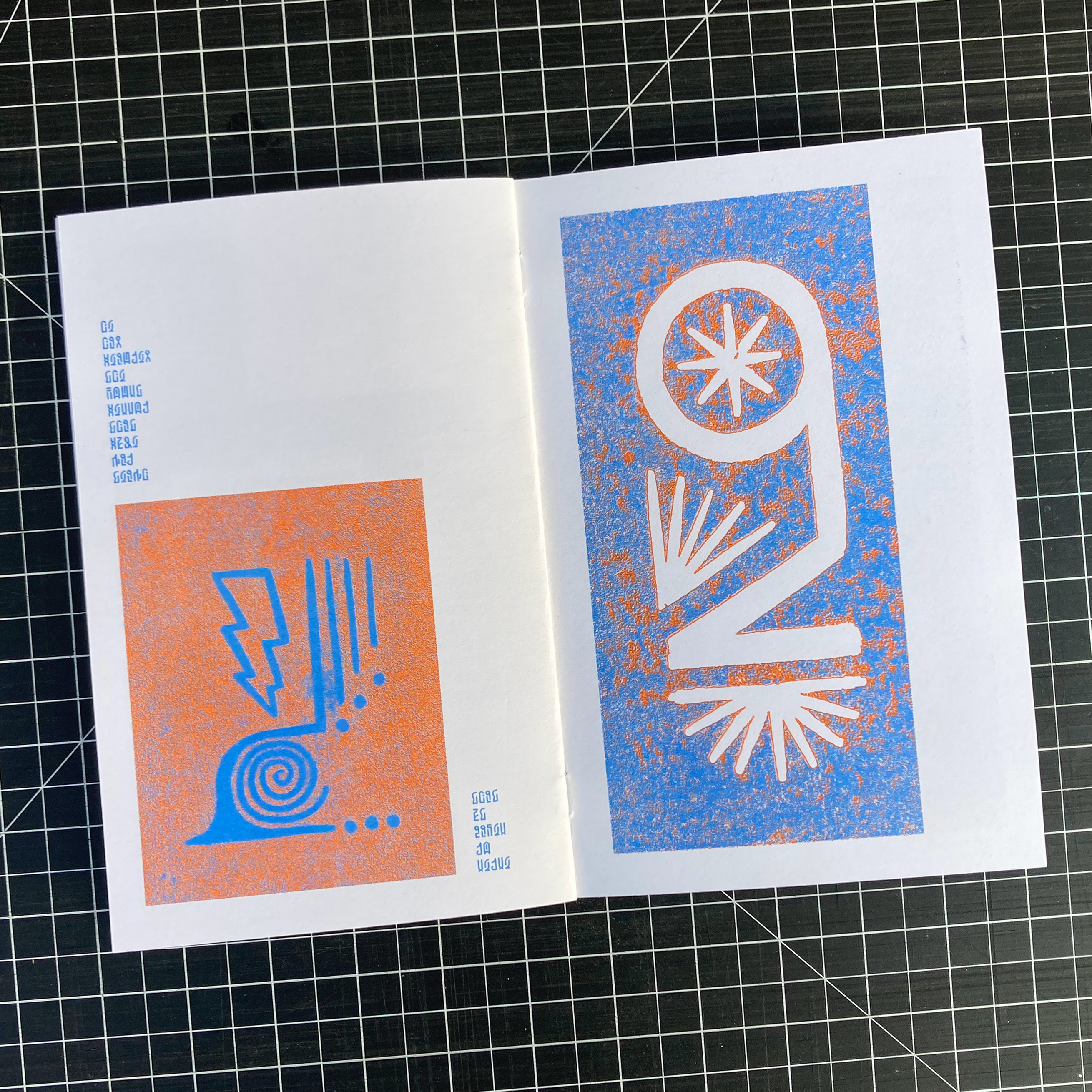
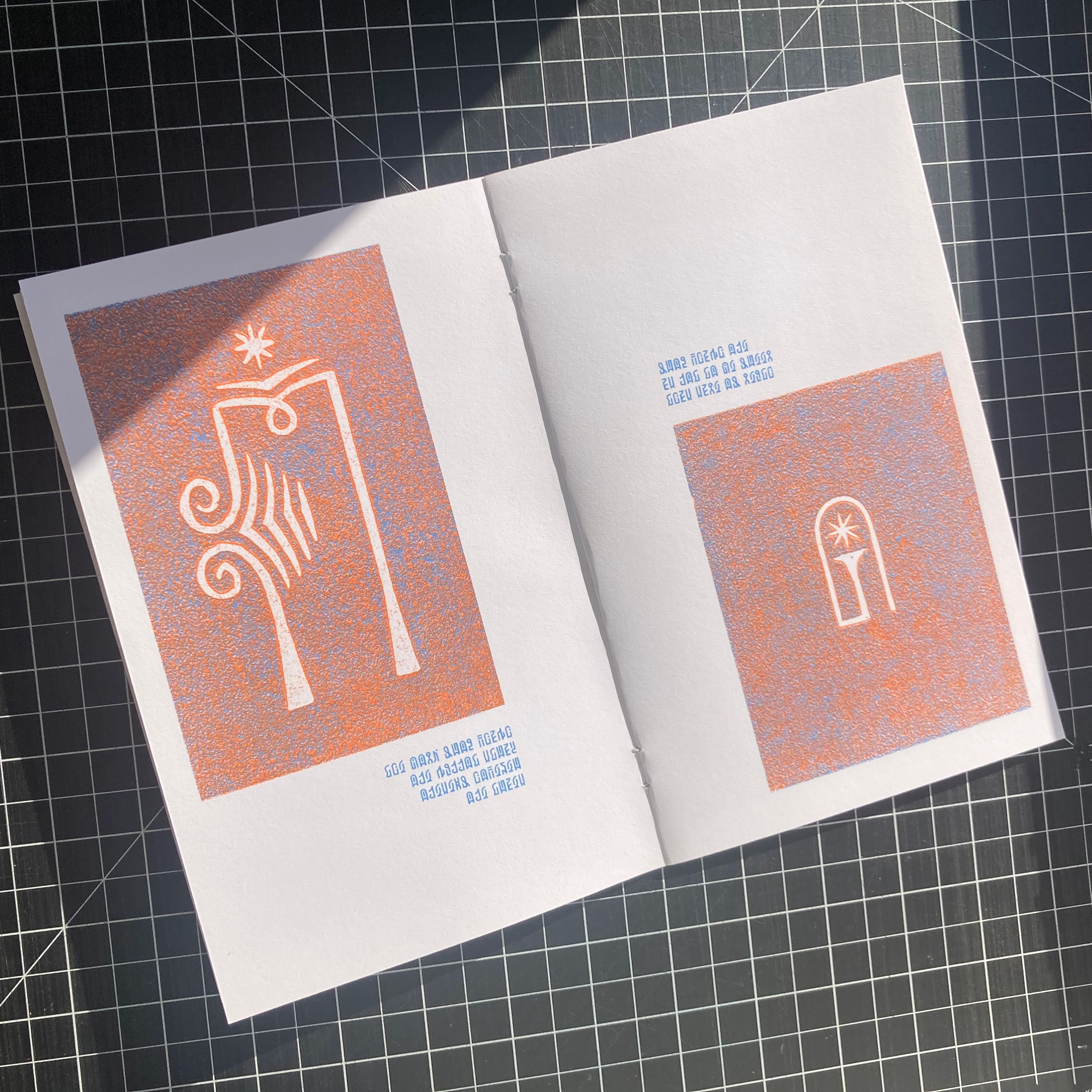
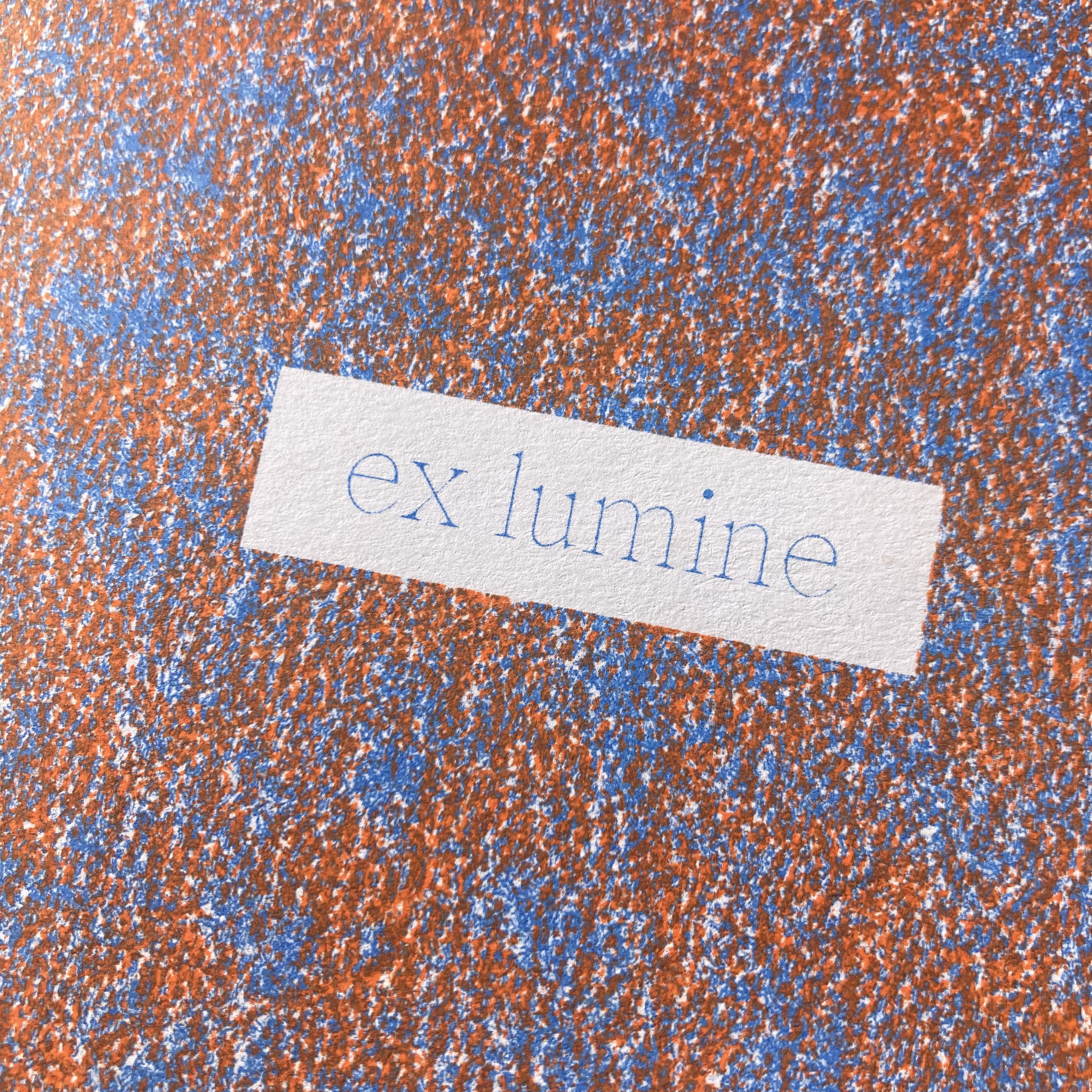
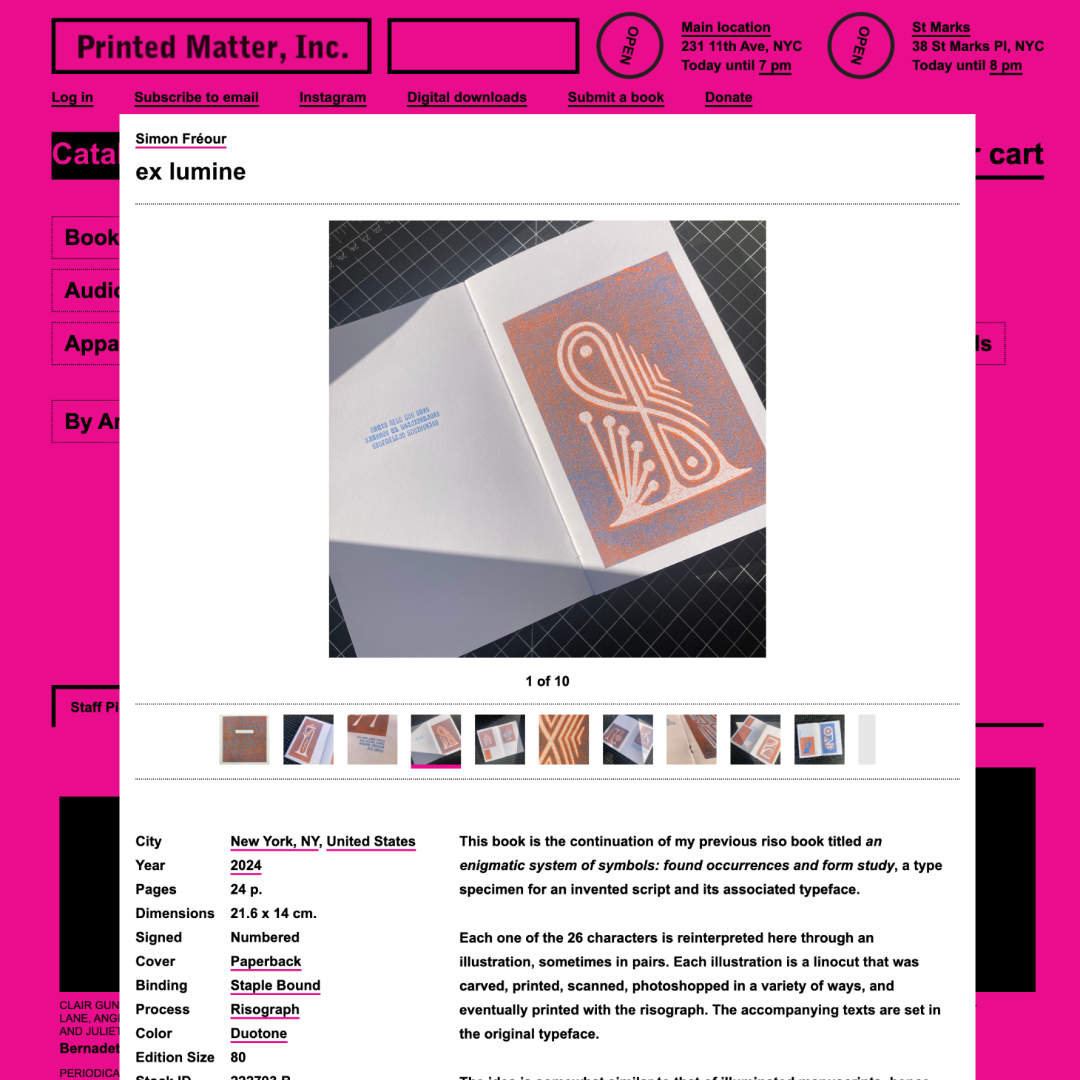
Quasi: Experimental Writing SystemsDaily Heller articleThe second book, ex lumine, is a further exploration of the same script through linocut re-interpretations of all the characters. Each linocut was printed, scanned and treated digitally to achieve a particular duotone texture once printed on the risograph. The main goal was to explore the combination of two printmaking techniques.
Copies of both books were sold at Printed Matter.